Six Things I Admire About People in the West
A four-part reflection on the habits that quietly sustain societies
Part I
Part II
Part III
Part IV
Part I
Note of Gratitude, From One World to Another
I am writing this to you, people in the West, from rural Uganda.
This is not flattery.
It is a considered reflection on the quiet strengths that have shaped your societies over time.
The habits.
The virtues.
The systems that work so well they often go unnoticed.
These are the same forces we seek to study, adapt, and patiently cultivate in the communities we serve.
Not as imitation,
but as shared human learning.
With that context in place, let me speak plainly.
The Habits That Quietly Hold Societies Together
I want to speak to you directly.
Not as an observer from a distance,
but as someone shaped by what I have seen, lived within, and learned from over many years.
There are six things I admire about you.
Not the visible symbols the world often associates with the West,
but the quieter habits that allow your societies to endure.
The world often points to your skylines.
Your technologies.
Your efficiency.
Your systems that move with precision.
But beneath all of that, something less visible is at work.
The habits.
The instincts.
The everyday ways of thinking and behaving
that quietly keep your societies standing.
Those are the things I have come to admire.

This reflection comes from nearly two decades of living in North America,
from studying European cultures,
and from observing closely over time.
It also comes from the work I now do with Baino Social Impact.
Work that has taught me to notice not just grand gestures,
but the small, repeated choices
that shape how people relate to time, learning, generosity, and responsibility.
So I want to speak to you.
To the people who have influenced how I think,
and who have shaped how we now try to build hope
in communities the world often overlooks.
This is not a study.
Not a sociological analysis.
This is a gesture of recognition.
A sincere thank you.
From one corner of the world to another.
Why These Observations Matter to Us
When you are trying to build something as fragile and demanding as hope,
especially in contexts shaped by poverty and illiteracy,
you begin to see the world differently.
You stop looking only at outcomes.
You begin to notice patterns.
The small things.
The repeated behaviours.
The habits that quietly shape trust, dignity, and possibility over time.
No society is perfect.
Every culture holds contradictions.
But there are ways of organising life
that make long-term progress more likely.
And there are qualities you have cultivated
that some of us would do well to study more carefully.
Some are practical.
Some are philosophical.
Some feel almost instinctive.
But together, they point to something essential:
What becomes possible
when responsibility is taken seriously.
For time.
For systems.
For learning.
For one another.
A Pause to Acknowledge What’s Working

The Six Things I Admire
And so, with humility and sincerity,
allow me to share six things I admire about you.
Six lived qualities that give me hope
that our world still has a future worth building together.
They may seem simple at first glance.
But in the hardest corners of poverty and illiteracy,
they become lessons in how societies rise.
Let me begin with the first.
A quality that quietly shapes how you show up,
every single day.
1. Your Respect for Time and Systems

Let me begin by honouring the very thing I am about to describe.
You Westerners, treat time almost as though it were sacred;
Not as a rigid schedule,
but as a shared promise.
When you say you will be there at nine, you arrive before the hour.
Not out of fear.
Not because someone is watching.
But because it feels right.
And what I have come to understand is this:
For you, punctuality is not merely efficiency.
It is integrity.
A quiet expression of discipline.
A gesture of respect.
Time, in your world, is a form of regard.
A way of saying:
I see you.
I value what you have entrusted to me.
And that respect does not stop at clocks.
It extends into your systems.
You believe in order.
Not control.
In processes that outlast personalities and emotion.
That is why your institutions, imperfect as they are, continue to stand.
They function not by accident,
but through a shared instinct that structure matters.
You treat time as a moral resource.
Not to be wasted.
Not to be taken lightly.
Not to be lost through carelessness.
And that quiet discipline, repeated every day, builds something others may overlook:
A rhythm of reliability.
What feels ordinary to you
starting meetings on time,
keeping appointments,
following through
is extraordinary in places where time bends more easily.
It is the hidden architecture of trust.
Time as Covenant, Not Convenience

Across cultures, we all know time is valuable.
But living as though it is valuable requires discipline.
Where I come from, we say:
“Time is the master that never waits.”
We believe it.
But poverty bends life’s rhythm.
Survival interrupts structure.
Futures become uncertain.
In places where systems falter, time becomes slippery.
Meetings stretch.
Promises drift.
Urgency dissolves into improvisation.
But you have made time into something more.
A covenant.
A shared agreement that says:
You matter.
Your presence carries weight.
The trust you place in my care will not be taken lightly.
In that way, your respect for time becomes more than punctuality.
It becomes a social practice that protects dignity.
A form of mutual honour.
I also understand that not everyone in the West experiences their systems in relation to time as flawless.
Some see them as bureaucratic
Slow.
Uneven.
At times, frustrating.
But speaking from what I have lived and observed,
I can only recognise the broader pattern:
A cultural instinct that treats time and structure as forms of respect.
Even with imperfections, that rhythm of reliability is something I have come to value deeply.
The Quiet Strength of Your Systems
From that reverence for time flows another quiet strength:
Your systems.
You build systems that endure.
Systems that function even when no one is watching.
Schools.
Healthcare.
Transport.
Public services.
Imperfect, yes.
But steady enough to strengthen a sense of direction.
And what I have learned is this:
Your systems do more than deliver services.
They reduce uncertainty.
They create predictability.
They give people something to rely on.
You do not wait for perfect conditions.
You work within constraints
and improve from within.
Step by step.
Systems bring reliability.
Reliability builds trust.
And trust makes progress possible.
What We’ve Learned at Baino Social Impact
At Baino Social Impact, we hold this lesson close.
Because fighting poverty is not only about compassion or resources.
It is about structure.
Discipline.
Accountability.
Systems that people can rely on.
When a teacher arrives on time, a student learns consistency.
When a donor receives transparency,
they learn that their trust has weight.
When we show up predictably,
communities learn that hope is not a rumour.
It is a rhythm.
In a world where chaos is often mistaken for flexibility,
your respect for time and systems reminds us of something simple:
Progress needs rhythm.
And dignity keeps its own schedule.
Perhaps that is what first drew my admiration.
Not the wealth of the West,
but the quiet discipline that makes progress feel possible.
And from that discipline flows something even more demanding:
The courage to give beyond your own.
Conclusion — A Pause Before We Continue

And this is where we pause.
In this opening chapter, I have tried to name something often overlooked:
The quiet strength that flows from how you treat time,
how you rely on systems,
and how discipline gives your societies their rhythm.
But this reflection does not end here.
Because these patterns extend beyond your own communities.
In Part 2, I want to explore two further qualities:
Your generosity and global sense of responsibility.
And your culture of lifelong learning and system building.
The belief that curiosity does not retire.
That institutions can adapt and renew.
And that progress is something built over time.
These are not just admirable traits.
They are patterns that expand what is possible.
So we continue there.
Where the reflection opens outward,
and where the lessons for those of us building hope
come more clearly into view.
Part II
Your Generosity, and a Commitment to Learning Beyond Borders

Before we continue, it is worth acknowledging the shift taking place here.
In Part I, we looked at how time, systems, and discipline create stability within societies.
What follows turns outward.
Because the same habits that organise life at home
also shape how responsibility is extended beyond it.
In this next part, generosity and learning are not presented as personal virtues alone,
but as ways of engaging with the wider world.
Ways that allow care, knowledge, and responsibility
to travel further than any individual could alone.
2. Your Generosity and Sense of Responsibility
You Westerners give.
Not only to your own.
Not only to those within reach.
But beyond proximity.
To people you may never meet.
To lives you may never see unfold.
And what I have come to admire is not only the act of giving,
but what you have done with that impulse.
You have given it structure.
You have learned how to organise compassion.
How to extend it beyond instinct.
And giving it a chance to scale.
Through charities, foundations, and global networks,
you have built systems that carry care across distance.
These systems do more than provide support.
They equip.
With frameworks.
With accountability.
With ways to measure, refine, and extend impact over time.
In your hands, generosity is not left to chance.
It is shaped.
Sustained.
Designed to endure.

You Engineered Compassion Into Infrastructure
You did not only expand generosity.
You built the means for it to move.
Across oceans.
Across languages.
Across difference itself.
That is why, in many parts of the world,
support often arrives from places far away.
Quietly building services.
Quietly sustaining them.
Other societies honour generosity deeply.
Sometimes beautifully.
But often within familiar boundaries.
You chose a different path.
You extended generosity into systems.
Tax structures that encourage giving.
Institutions that think across generations.
Frameworks that prioritise accountability.
This is not incidental.
It reflects a shared conviction:
that prosperity carries responsibility.
Not only locally,
but beyond borders.
You Widened the Circle
Most cultures teach generosity.
But often toward those closest to us.
Those who look like us.
Speak like us.
Live as we do.
Or follow our belief system.
A closed circuit of care.
It can be meaningful.
Even necessary.
But it rarely travels far.
What I have seen in the West is something more demanding.
A willingness to extend care beyond familiarity.
To recognise dignity before identity.
To give without requiring sameness or cultural surrender.
This is not without tension.
And it is not always perfect.
But it reflects a kind of moral expansion.
A belief that responsibility does not end at the edge of one’s own world.
You Keep Investing in Coexistence

You continue to invest in coexistence.
Especially in your cities.
You test what it means for difference to live side by side.
Not without strain.
Not without friction.
But with persistence.
While many parts of the world narrow their definitions of belonging,
you continue to explore a wider one.
You adjust.
You reconsider.
You try again.
You allow the idea of coexistence to remain open.
And that willingness matters.
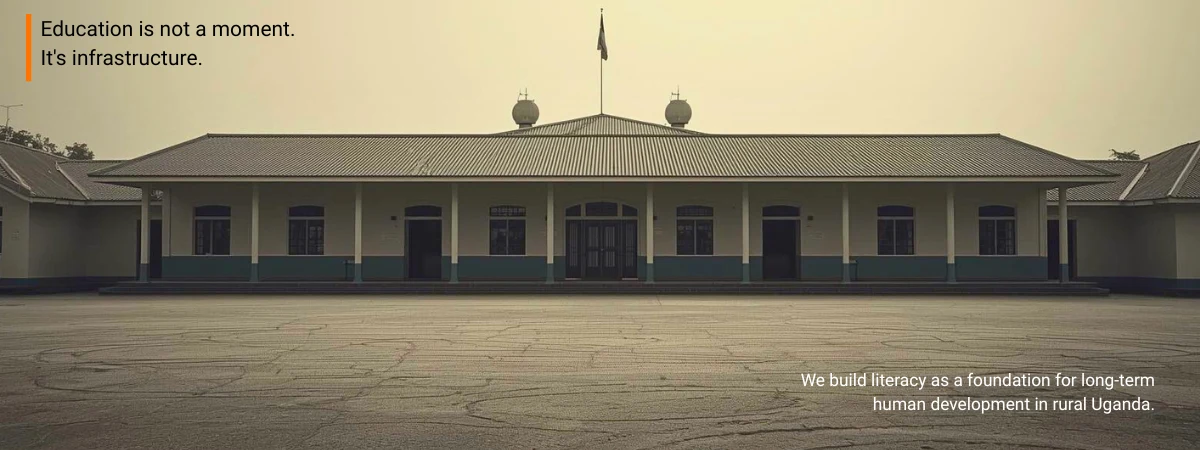
What We’ve Learned at Baino Social Impact
At Baino Social Impact, we have taken this lesson seriously.
We are learning how to speak across distance.
How to steward support from people
who may never walk our roads,
but who recognise the dignity of those who do.
From your example, we have learned this:
That compassion can be structured.
That generosity can be sustained.
That care, when organised, can endure.
Every child who learns to read,
every young person who begins to see possibility,
carries forward a small extension of that belief.
Not as dependency.
But as shared responsibility.
So let me say this plainly.
If these ideals are not protected,
refined,
and allowed to continue,
few others will sustain them.
The world needs this kind of commitment.
And for that, I am grateful.
Asante sana.
3. Your Culture of Lifelong Learning and System Building

You have made learning a lifelong companion.
Not something confined to childhood,
but something that continues.
You ask questions without hesitation.
You take classes not only out of necessity,
but out of interest.
You read not only to know,
but to understand.
There is a quiet belief beneath this:
That learning, in almost any form,
has the power to improve a life.
And you have built environments that reflect that belief.
Libraries open to all.
Conversations that travel across borders.
Knowledge that is shared, not guarded.
In your world, learning feels present.
Accessible.
Expected.
Alive.
That is why your societies continue to evolve.
You do not stop at knowing.
You keep asking.
And in doing so, you open doors.
For medicine.
For technology.
For art.
For justice.
For democracy itself.
There is something quietly remarkable in this.
The way a mechanic, a retiree, and a student
can sit in the same room,
not because they must,
but because they can.
Because they want to.
It reflects a society that treats education
not as a privilege,
but as part of its culture.
Something shared.
Something sustained.
Education as Culture, Not Privilege

You have built environments where curiosity is protected.
Where asking questions is not discouraged,
but expected.
Where innovation is not an accident,
but the result of people encouraged to keep asking why.
And in doing so, you reveal something important:
Progress is rarely spontaneous.
What appears as progress
is often the result of foundations built long before it becomes visible.
Your commitment to learning has done more than produce institutions.
It has shaped posture.
An understanding that knowledge is not fixed.
It grows.
It adapts.
It corrects itself.
And that willingness to learn, and to relearn,
allows your societies to remain steady.
Not because everything is known,
but because the search continues.
This is learning as infrastructure.
Not an intervention.
Not a moment.
But a system that carries generations forward.
You Believe in Systems — and in Reform
Alongside this culture of learning,
there is another conviction:
That systems matter.
But also that they can be questioned.
Earlier, we honoured the strength of systems
that create reliability and trust.
Here, something equally important appears.
Your belief that systems can be examined,
challenged,
and improved.
You believe in feedback.
In review.
In reform.
You accept that no institution is beyond question.
In many places, systems are inherited and treated as sanctified.
To question them is to offend.
To challenge them is to risk exclusion.
But you ask difficult questions.
You publish findings.
You gather in public spaces and say:
This is not working.
Let us improve it.
You hold systems accountable.
Not to perfection,
but to purpose.
And in doing so, you reveal something essential:
If progress lasts,
it was built with this kind of honesty.
Honesty as the Beginning of Progress
Beneath this posture is something even more demanding.
Honesty.
Not only with others,
but with yourselves.
A willingness to name what is broken.
To acknowledge what is unjust.
To accept that truth, even when uncomfortable,
is where change begins.

What We’ve Learned at Baino Social Impact
At Baino Social Impact, we have taken this lesson seriously.
We examine how we work.
We question our assumptions.
We invite feedback from the very communities we serve.
Because we have learned this:
Compassion may respond to suffering.
But only structure can prevent it from repeating.
Systems can be respected
without being protected from scrutiny.
Institutions endure
because they are allowed to evolve.
And structure does not exclude humanity.
It supports it.

We believe, as you do,
that learning has the power to change direction.
Every book opened.
Every lesson shared.
Every conversation held under a mango tree.
Each one can become a quiet act of liberation.
When a child learns to read,
they are not only gaining a skill.
They are entering a current of curiosity
that has carried societies forward.
They begin to ask a simple question:
Why not?
And that question,
spoken softly,
can change a life.
A family.
A future.
You have shown me that learning is more than a pathway out of poverty.
It is light.
And once it is lit,
it does not ask where it began.
It simply continues.
We hold that same belief.
Every future rests on something built long before it arrives.
And every child who learns to read
steps into a world
where curiosity can change destiny.
Conclusion — When Generosity Is Structured, and Learning Is Shared
As I reflect on these two patterns,
your generosity
and your culture of learning,
something becomes clear.
Every society carries strengths.
Every culture holds gifts.
But not every community allows those gifts
to move beyond itself.
You have.
Your generosity reaches across distance.
Your commitment to learning stretches across time.
One organises care.
The other sustains it.
Together, they shape what becomes possible.
Not only in your societies,
but in places far beyond them.
Every book placed in a child’s hands.
Every classroom strengthened.
Every future widened.
Carries a quiet echo of that example.
Give beyond yourself.
Learn without end.
Build what can endure.
This is not a passing influence.
It is a pattern that continues.
And here,
it continues with us.
Looking Ahead

What follows moves closer to the foundations beneath progress.
In Part III, we turn to two further qualities:
Your respect for human dignity and equal worth.
And discipline.
Not as visible traits,
but as the forces that allow everything else to hold.
If generosity extends outward,
and learning shapes the mind,
then dignity and discipline reveal something deeper.
The conditions that allow societies to endure.
Part III
The Moral Architecture That Holds Progress Together

Before continuing, it is worth pausing to notice what is shifting.
The reflections so far have traced how generosity and learning extend responsibility outward.
What follows moves closer still.
Beneath policy and practice,
toward the moral architecture that allows those systems to endure.
At this stage, something becomes clear.
Progress does not hold through goodwill alone.
It rests on deeper commitments.
To dignity.
And to the discipline required to honour that dignity over time.
In this part, admiration gives way to examination.
Not of what is visible,
but of what quietly sustains everything built upon it.
4. Your Respect for Human Dignity and Equal Worth
No society has perfected equality.
Not the West.
Not the rest of us.
But you have made it a collective pursuit.
A public commitment.
You have written the idea of equal worth into your laws,
your classrooms,
your art,
your public conversations.
You have made human rights a shared language.
So influential that even criticism often speaks in its terms.
That is progress.
Not perfection.
But conscience.
From civil rights to gender equality,
you have shown that justice is not a destination reached once.
It is a long process.
One protest.
One policy.
One reckoning at a time.
Even in moments of tension,
your societies lean toward inclusion.
For women.
For minorities.
For people with disabilities.
For those whose voices were once ignored.
Still imperfect.
But moving.
You Confront Yourselves With Moral Courage
There is a form of courage in how you confront yourselves.
In how you revisit your own history.
In how you question institutions
and still choose to move forward.
Your movements for justice are not always comfortable.
They can be loud.
Messy.
At times, divisive.
But they reveal something essential.
A society willing to examine itself
is a society capable of growth.
You do not silence the demand for fairness.
You make space for it.
And in doing so, you show that progress is not maintained by certainty,
but by a willingness to confront what is unfinished.
Not All Movements Heal — But the Instinct Matters
It is true.
Not every moral movement moves gently.
Some arrive harshly.
Shaming instead of guiding.
Condemning instead of clarifying.
Dividing instead of healing.
That tension is real.
But beneath it, there is a deeper instinct.
One I choose to recognise here.
An instinct that pushes toward expansion.
Toward inclusion.
Toward a broader understanding of dignity.
At its best, it does not erase what came before.
It works to improve it.
To correct without destroying.
To build with care.
That is the West I have come to respect.
A society willing to wrestle with itself,
yet unwilling to become indifferent.
And that refusal matters.
Because it reveals something fundamental:
Justice is not secured once.
It is sustained through discipline.
What We’ve Learned at Baino Social Impact

Let me make this personal.
Discipline matters to me.
So much so that it became the first word in our motto at Baino Social Impact:
Discipline and Interdependent Independence.
Because the work we do is not only about education.
It is about dignity.
The kind that cannot be given or taken away,
only recognised and strengthened.
When a child learns to read,
something deeper happens.
They begin to see themselves differently.
When a community rediscovers its worth,
that too is a form of progress.
These are quiet human rights moments.
Our way of saying:
We also believe in equal worth.

Dignity Is the Inheritance We Share
When we fight illiteracy,
we are not only transferring knowledge.
We are restoring self-worth.
A child who can read their own name
begins to reclaim their place in the human story.
This is the conviction behind our work.
That every person deserves to live with dignity.
Not because of circumstance,
but because of who they are.
Dignity is not scarce.
It multiplies when recognised.
And in this, the West has offered a powerful example.
Perhaps that is why your societies remain places people are drawn to.
Because behind your institutions
is a way of thinking that allows space for reflection,
for disagreement,
for reform.
Freedom may open the door.
But discipline is what carries it forward.

5. Discipline: The Quiet Power Behind Your Progress
There is a virtue you carry that rarely draws attention.
It is not loud.
It does not announce itself.
Yet it endures.
Discipline.
You practise it not only in your schedules,
but in your posture toward life.
You build routines that protect long-term goals.
You show up when it is inconvenient.
You follow through when no one is watching.
This is how continuity is built.
Because discipline is not defined by intensity.
It is defined by repetition.
It is choosing the long path over the easy one.
Honouring commitments long after the moment has passed.
It is the quiet decision to continue.
You Show Up, Even When Momentum Fades

In many parts of the world, progress comes in bursts.
Hope rises,
then fades.
Plans begin with energy
and quietly dissolve over time.
But you persist.
You give consistently.
You volunteer steadily.
You build institutions designed to last beyond excitement.
You seem to understand something decisive:
Progress is not an event.
It is a rhythm.
That understanding has shaped our work at Baino Social Impact.
We build with continuity in mind.
Not only what inspires,
but what can endure.
Not only what begins well,
but what continues when attention fades.
Because real service rarely announces itself.
It accumulates.
Discipline Is the Soil Where Dignity Grows
Discipline, on its own, is not enough.
It can become rigid.
It can preserve what should change.
But at its best, it does something rare.
It gives form to intention.
It turns care into structure.
It turns effort into continuity.
It turns compassion into responsibility.
It becomes the ground where dignity can take root.
Behind every school sustained,
every classroom maintained,
every book kept in circulation,
there is rarely spectacle.
Only consistency.
This is what your societies have demonstrated clearly.
Progress not as a moment,
but as a pattern sustained over time.
And it is this pattern that endures.
Not the loudest effort,
but the most faithful one.
For that, we are grateful.
Conclusion — Virtues Renewed Daily, Systems Sustained Over Generations
As we close this part, a pattern becomes visible.
The qualities we have traced
your respect for systems,
your generosity beyond borders,
your culture of learning,
your discipline
are not incidental.
They are chosen.
Repeated.
Refined over time.
They form the quiet frameworks
that allow societies to stretch,
adapt,
and endure.
And they have shaped us as well.
At Baino Social Impact, we draw from these strengths deliberately.
We build structure where uncertainty once prevailed.
We cultivate consistency where unpredictability once interrupted progress.
We invest in learning because it sustains dignity.
We practise discipline because it allows that dignity to endure.
These are not borrowed ideas.
They are shared human capacities.
They travel.
They adapt.
They take root wherever they are practised with care.
They remind us that progress is never the work of one culture alone.
It is a shared inheritance.
One we are still learning how to carry forward.
Looking Ahead — When Lightness Becomes Strength
There is one remaining quality.
Less visible.
Often overlooked.
Yet quietly transformative.
In the final part, we turn to a different kind of strength.
A way of engaging the world with openness rather than defensiveness.
With curiosity rather than certainty.
A lightness that allows experimentation.
That softens conflict.
That creates room for thought to move.
Once recognised, it changes how everything else is held.
And from there, the reflection will close.
Not with a conclusion,
but with a return.
To what these qualities make possible,
when carried forward together.
Institutions may carry progress forward, but it is dignity and discipline that quietly hold them together.
Part IV
The Lightness That Allows Progress to Renew Itself

As we come to the final part of these reflections,
one more quality comes into view.
Less visible.
Easily overlooked.
Yet essential.
The virtues we have traced so far
discipline, dignity, generosity, learning, and systems
help explain how progress is built and sustained.
But something else allows these qualities to remain alive.
Something that prevents them from becoming rigid.
A certain lightness in how you engage the world.
A habit of questioning.
Of experimenting.
Of approaching the unknown with curiosity rather than fear.
This is where we turn now.
To a quality that is quieter,
but deeply generative.
One that allows societies not only to build,
but to renew.
6. Your Lightness of Engagement and of the Mind
This quality is subtle.
But it matters.
It is a kind of mental openness.
A spaciousness shaped by curiosity, freedom, and a willingness to explore.
It allows your societies to keep creating,
questioning,
and adapting.
You think lightly.
Not carelessly,
but without unnecessary constraint.
You ask “Why not?”
where others pause at “What if?”
This is not naïveté.
It is confidence without rigidity.
Imagination without fear.
And it functions as a system.
It lowers the cost of participation.
It reduces the fear of being wrong.
It invites people into thinking, rather than guarding it.
That is why your societies continue to generate ideas that travel,
technologies that reshape daily life,
and movements that influence how the world understands itself.
You do not confine thought.
You give it room.

The Freedom to Question — Even Yourselves
There is a particular freedom in how you question yourselves.
A willingness to examine your own assumptions.
To let ideas move before they are judged.
To treat thought as something to be tested,
not defended.
You do not hold tradition as something fixed.
You allow it to be refined.
You do not wait for perfect conditions.
You begin,
and allow learning to follow.
This is not disorder.
It is trust in process.
It is how imagination becomes structure.
Ideas surface.
They are tested.
They are improved.
Without humiliation.
Without fear.
Lightness, here, is not the absence of seriousness.
It is seriousness without fear.

You Have Designed Openness Into Engagement
Another aspect of this quality appears in how you engage difference.
Some societies approach difference with caution.
With defensiveness.
With layers of restraint.
Interaction becomes effortful.
Missteps carry weight.
But you have developed a different posture.
You meet difference with curiosity before judgment.
You ask before you conclude.
You listen before you categorise.
This does not remove disagreement.
But it changes its conditions.
It reduces friction.
It shortens distance.
It allows collaboration to emerge.
Lightness, here, is not indifference.
It is accessibility.
Simplicity as a Form of Respect
In many places, engagement is structured through layers.
Rituals to observe.
Hierarchies to navigate.
Codes to interpret.
Before meaningful work can begin.
You have chosen another path.
Clarity.
A “yes” that means yes.
A “no” that means no.
Directness that does not diminish respect.
Simplicity that makes participation easier.
This is not the absence of structure.
It is refinement.
And because of it,
trust forms faster.
Work begins sooner.
That, too, is a system.

Why This Lightness Matters to Us
For an organisation like Baino Social Impact,
working across contexts and cultures,
this quality is not incidental.
It is enabling.
It allows us to ask difficult questions
without creating distance.
To learn without performance.
To build trust without unnecessary complexity.
It reminds us that accessibility is not only technical.
It is relational.
It is how people are met.
How ideas are received.
How space is made for others to speak.
This posture allows collaboration to move.
And movement is what systems need in order to grow.
When Thought Is Free, Futures Expand
In many parts of the world,
thinking differently carries risk.
Questioning authority can be mistaken for defiance.
Imagining beyond what exists can be misunderstood.
But you have built environments
where new ideas are not suppressed.
Where innovation is treated as contribution,
not disruption.
You have shown that freedom of thought
is not optional.
It is a responsibility.
Because it carries a deeper belief:
That the world is not finished.
And does not have to remain as it is.

The Deepest Aim of Education
This is what we seek to cultivate as well.
Not only in classrooms,
but in how people think.
Education, at its core, is freedom.
Not only the ability to read or calculate,
but the ability to imagine beyond constraint.
When a child learns to think independently,
something shifts.
They begin to ask:
Why not?
And that question,
spoken quietly,
can change a life.
A family.
A future.
This is the light we seek to protect.
In classrooms.
In communities ready to imagine again.
Because every idea begins with a free thought.
And when thought is free,
the future has room to move.
Perhaps this is one of the West’s most enduring contributions.
Not wealth.
Not even systems.
But the courage
to think anew.

Virtues Practiced Long Enough to Shape the Future
And so we arrive here.
Six things I have come to admire.
Not as curiosities.
Not as accidents of history.
But as practices.
Repeated.
Refined.
Carried across time.
You are not perfect.
No society is.
But you continue.
You build.
You question.
You revise.
And in that process, something important is revealed.
Progress is not secured once.
It is sustained.
The Work of Refinement
What I have observed is a willingness
to keep refining the human experiment.
Not always smoothly.
Not without tension.
But in the open.
With debate rather than silence.
With reform rather than retreat.
That honesty carries its own strength.

From Admiration to Responsibility
These reflections were never written only to admire.
They were written to recognise the habits
that allow societies to sustain progress.
Dignity, practised in public life.
Discipline, carried across time.
Generosity that extends beyond borders.
Curiosity that keeps renewal possible.
These are not Western traits.
They are human capacities.
And they matter everywhere.
What We Carry Forward at Baino
At Baino Social Impact, we carry these patterns deliberately.
Not to imitate,
but to honour what works.
To take discipline
and build schoolrooms that endure.
To take generosity
and turn it into opportunity.
To take curiosity
and make literacy possible.
To take dignity
and allow it to be lived, not declared.
Because lasting change does not come from moments.
It comes from structure.
From what is built to hold.
A Shared Future
The story of progress is not written by one part of the world alone.
It is shaped through exchange.
If we can learn from your systems,
and you can recognise our resilience,
then something more balanced becomes possible.
Not charity.
But partnership.
Not distance.
But mutual responsibility.
A future where every child,
regardless of where they are born,
has the space to grow
into the fullness of their mind
and the dignity of their own becoming.
Closing Reflection
My hope is simple.
That we continue learning from one another.
That openness meets endurance.
That structure meets spirit.
And that somewhere between them,
a more grounded world takes shape.
Thank you.
For your example.
For your consistency.
For the quiet systems you continue to uphold.
With respect,
Peter Kalyabe
Founder & Executive Director
Baino Social Impact
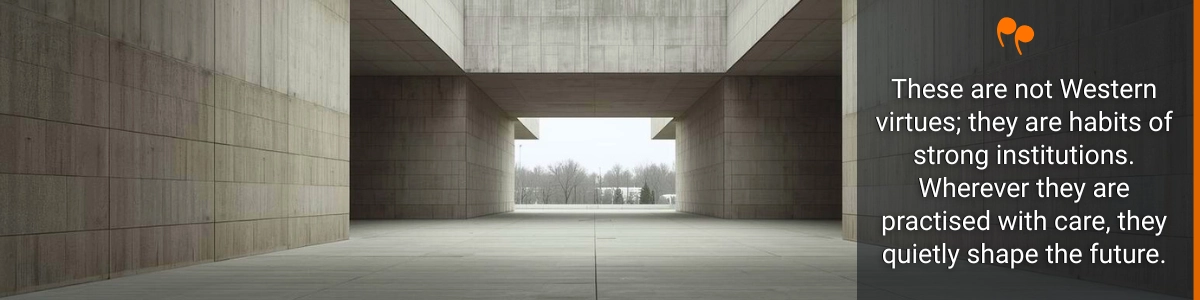
Progress endures not because societies are flawless, but because they practise certain virtues
long enough for them to become institutions that quietly shape the future.