Because lasting change begins when people reclaim the power to shape their own future.
The Temptation to Fix It All
There are days I wish I could fix everything at once.
It’s a tempting, too-good-to-be-true thought—the kind that creeps in when I see a child walking barefoot to school, or a parent, a caregiver, quietly rationing between two basic needs. Perhaps skipping a meal just to save enough for their child’s education.
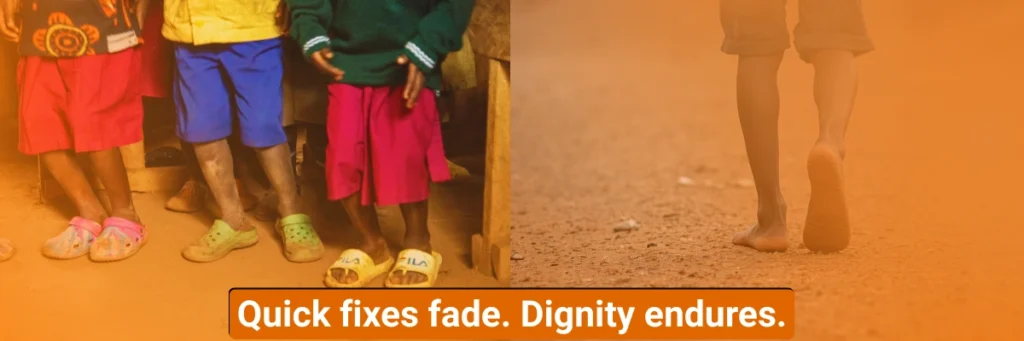
And in those moments, it’s hard not to feel that familiar ache—the one that whispers, “You must do something. Now.”
It’s a feeling anyone with a heart understands.
The impulse to reach, to repair, to make the pain go away.
A quick fix. A handout. A moment of relief.
But over the years, I’ve learned something that humbles me every time:
Quick fixes fade. Dignity endures.
Not every act of help leads to healing.
Real change—the kind that outlives us—can’t be rushed.
It grows quietly, through patience and partnership.
Through the courage to listen before acting.
Through the trust that those we serve are not broken—only waiting for the space to rise.
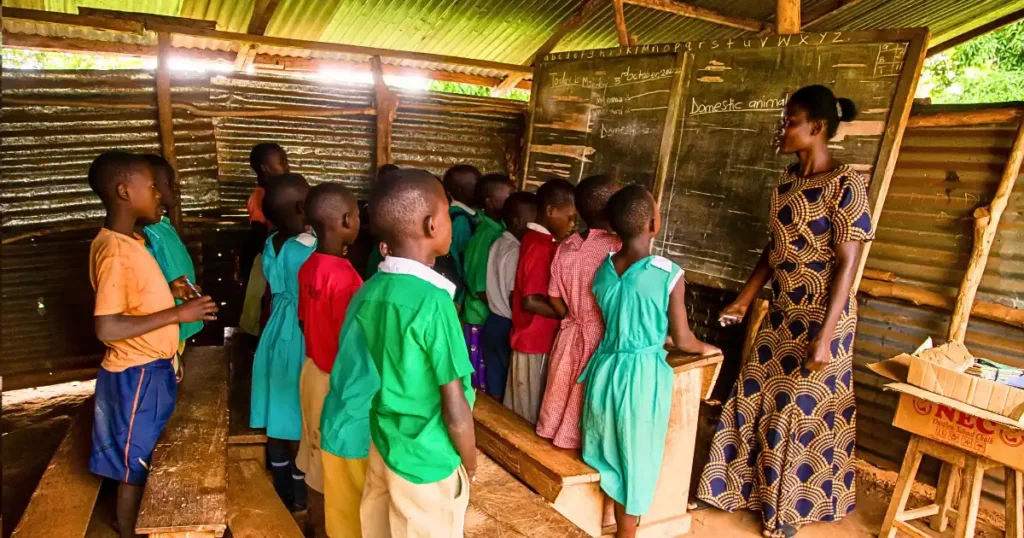
That’s why, at Baino Social Impact, we center everything we do on empowerment through education in rural Africa—because we’ve seen how knowledge restores dignity, and how dignity turns hope into lasting change.
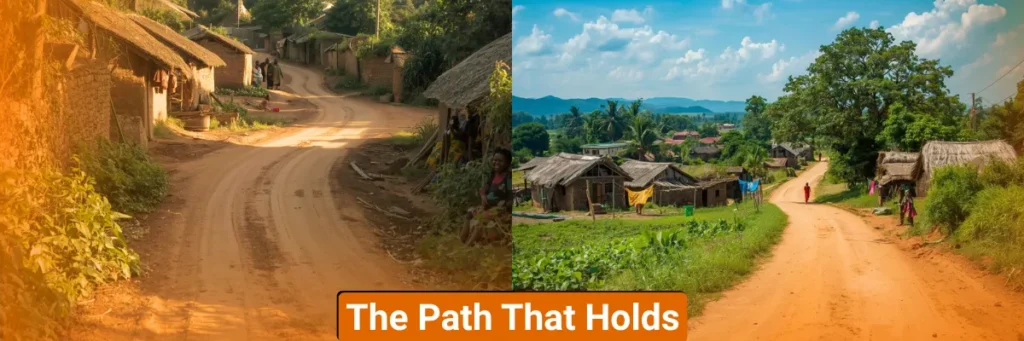
The Path That Holds
Empowerment is not the fastest path.
It’s hard to measure in a short time frame.
It doesn’t photograph easily, and it rarely makes headlines.
It doesn’t always feel heroic.
But it’s the path that holds.
Because when people build their own future, they protect it.
When they lift themselves, they don’t let go.
And so, even when it’s hard—especially when it’s hard—we choose empowerment.
Not because it’s easier, but because it’s truer.
Because every story that lasts begins with someone who’s been trusted to stand on their own feet.
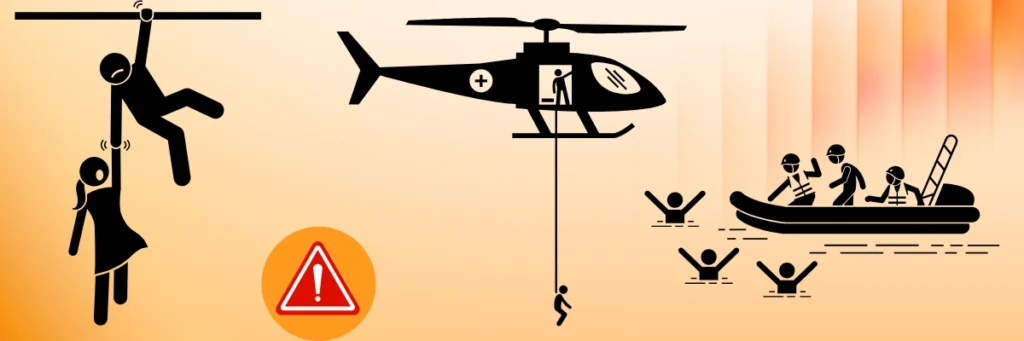
That’s what we’ve come to understand at Baino Social Impact:
Our role isn’t to rescue.
It’s not to offer fleeting comfort.
It’s to build the conditions where dignity and determination can do their quiet work—by inculcating a strong sense of discipline that anchors progress long after the help is gone.
To build something that endures.
Something that lifts without replacing.
Something that strengthens without overshadowing.
To see people not as problems to solve, but as partners in building something better.
It’s the difference between giving answers—and making space for someone to find their own.
Because when we choose empowerment over rescue,
We don’t just change a moment.
We change a future.
The Quiet Work of Empowerment
We are here to empower.
Empowerment isn’t a slogan for us—it’s a daily practice.
And sometimes, that practice tests our patience, our resolve, and our faith in what’s possible.
But that’s exactly where its beauty lies.
What Empowerment Really Means
Beyond a Word — A Way of Working
Empowerment is one of those words we hear so often that it risks losing its meaning.
But for us, it’s not a slogan.
It’s the pulse that runs through everything we do.
It’s not about giving people power—because power was never ours to give.
It’s not about swooping in with ready-made solutions.
It’s about clearing the ground where power can grow.
To empower is to listen.
To learn.
To walk beside.
To dialogue.
It’s about showing up with tools—and trust.
It’s about believing that the people we serve already carry the strength to rise.
They don’t need saving.
They need space, support, and opportunity.
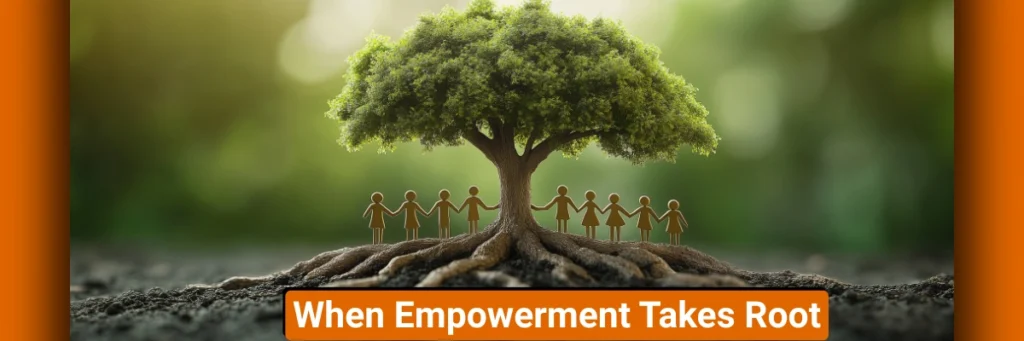
When Empowerment Takes Root
I’ve seen this truth unfold in the most ordinary places.
In a mother who once waited for handouts—now teaching her neighbors how to save together.
In a young man who once believed education was beyond his reach—now building classrooms with his own hands.
In a group of parents who used to gather to ask for help—now meeting to plan how they can help others.
That is empowerment.
Rescue says, “I’ll do it for you.”
Empowerment says, “You’ve got this—and I’ll walk with you.”
It’s the quiet shift from dependency to dignity.
From waiting for rescue to realizing we already have what it takes to rebuild.
The Difference That Lasts
Relief is necessary when crisis strikes—it saves lives, and we honor that.
But relief alone can’t build futures.
It can fill an empty stomach today,
But it cannot fill a life with purpose tomorrow.
Empowerment, on the other hand, does something extraordinary:
It restores the human will to participate in one’s own redemption.
It invites people not just to receive, but to create.
Not just to be helped, but to own the change they dream of.
Empowerment is the why behind every brick we lay,
Every child we sponsor,
Every partnership we build.
It’s the heartbeat of our mission.
Because when communities are empowered, they don’t just rise—they lift others with them.
Because when someone discovers they can shape their own future,
The world changes quietly—and forever.
And that’s how change lasts.
That’s why we chose this slower, quieter, often unseen, harder path.
Dignity — The Quiet Root of Empowerment
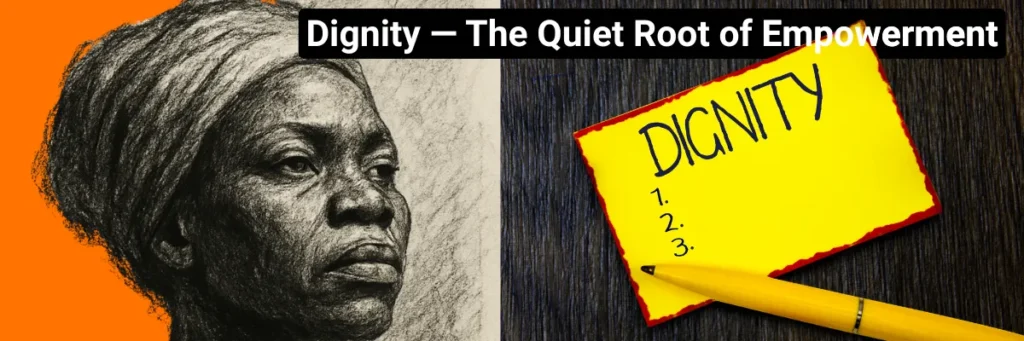
Where Strength Begins in Silence
Before a seed becomes a tree, something unseen happens underground—
Roots begin to form.
In the same way, before empowerment can grow, dignity must take root.
Without dignity, even the best-intentioned help becomes fragile—
Easily washed away by dependency or despair.
But with dignity, even the smallest seed of opportunity finds a way to flourish.
In every story of change, there’s always this invisible force—
Dignity—shaping the outcome.
You see it in the father mixing cement under the midday sun,
His hands blistered yet purposeful, building a classroom his children may one day sit in.
You see it in the teacher who stays after school,
Tutoring a girl who almost dropped out, her voice carrying both gentleness and resolve.
You see it in the mother who, trembling at first, signs her name for the very first time—
And smiles as though she’s just rewritten her place in the world.
A call for dignity is not pride.
It’s not a refusal of help.
It’s the quiet understanding: I am capable. My worth is not diminished by my need.
Dignity is what turns charity into partnership,
Pity into respect,
Beneficiaries into builders of their own destiny.
Dignity says, I see you. I honor your strength. I’m here to walk beside you—not ahead, not above.
Because empowerment without dignity is just another form of control.
But when a community’s dignity is protected,
Empowerment becomes natural.
People begin to see themselves not as recipients, but as creators.
They take ownership of their progress.
They celebrate not what was given to them,
But what they’ve built with their own hands.
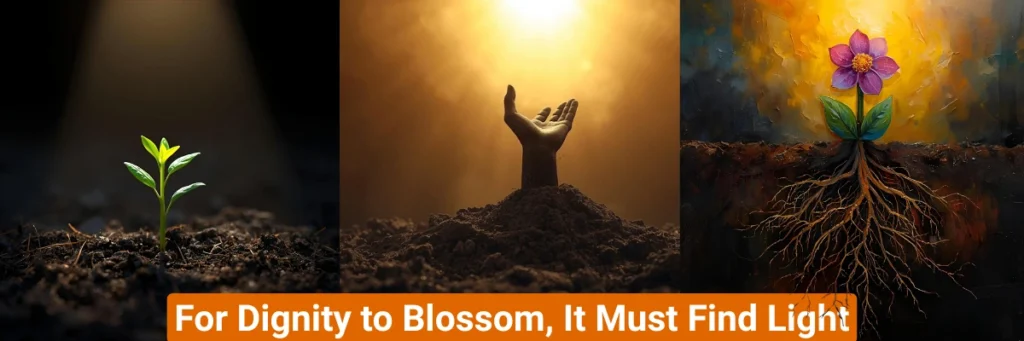
That’s why at Baino Social Impact, we don’t see dignity as a side note.
We see it as the soil where every dream must begin.
Because when dignity takes root,
Empowerment is no longer a gift.
It’s a birthright reclaimed.
When Dignity Finds Its Light
And yet—even the richest soil needs the right conditions to help seeds grow.
For many communities, that condition—
That light and nourishment—
Is education.
It is through learning that dignity finds its expression,
And empowerment gains direction.
The Difference Between Helping and Empowering
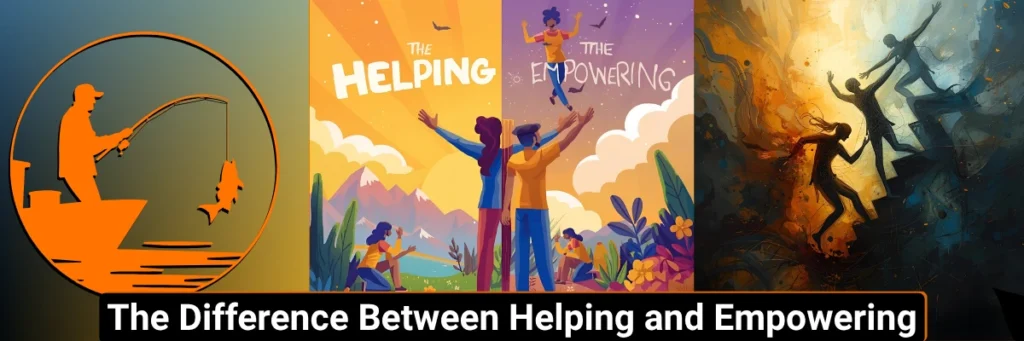
All forms of help are good — and deeply human.
All are offered with care.
But not all forms of help are equal.
The Kind of Help That Heals for a Moment
There’s a kind of help that arrives instantly—and it feels good in the moment.
It sees the problem, the gap, and gets to work.
It fills that gap and leaves everyone grateful.
It’s quick. It’s compassionate.
It’s the food parcel handed out after a storm.
It’s the donation that covers this term’s school fees.
It clearly says, “We care.”
And we do.
But sometimes, caring can unintentionally stop at comfort.
Or worse—reinforce dependency.
It can imply that the person in need is incomplete without intervention.
We’ve all heard the analogy:
“Give a man a fish and you feed him for a day; teach a man to fish and you feed him for a lifetime.”
It’s timeless. And it still holds.
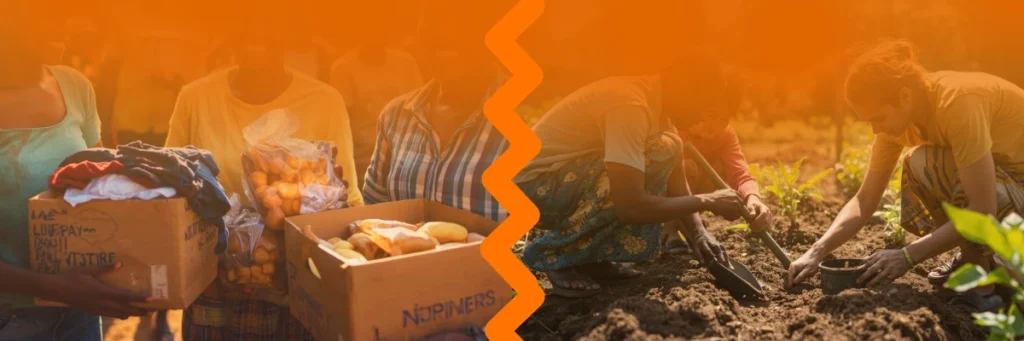
I remember meeting two groups of volunteers who came to a rural community at different times.
The first group brought food and clothes—generous, kind people who gave from the heart.
For a few weeks, everyone smiled.
But when the supplies ran out, so did the feeling of security.
The second group came months later.
They didn’t bring much—just tools, seeds, and training.
They stayed longer.
They taught families how to grow food on dry land, how to preserve seeds for the next season.
And when they left, something remained.
Not just food—but knowledge.
Not just relief—but resilience.
Where Giving Turns into Growing
That’s the broad difference between helping and empowering.
Helping can feed the body.
Empowerment feeds the will.
Helping brings comfort.
Empowerment brings confidence.
One is about what we do for others.
The other is about what we help them discover within themselves.
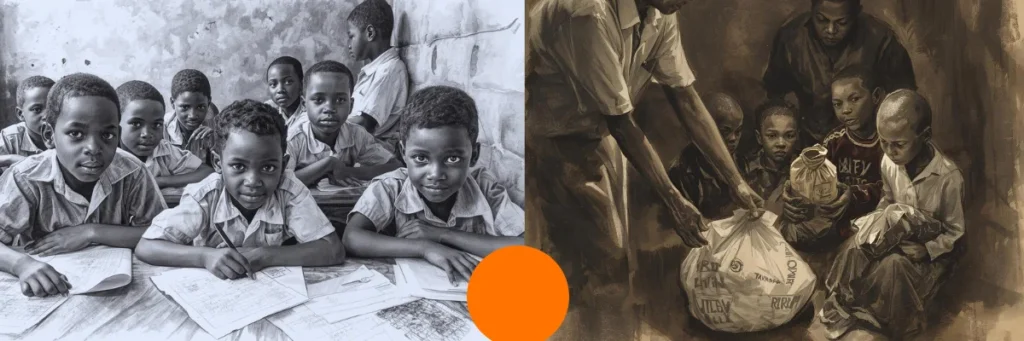
Empowerment centers the person being supported.
It builds agency—not reliance.
At Baino Social Impact, we hold this difference close.
We measure our impact not just by how many people we help,
But by how many are growing—long after we’ve stepped back.
And that means being partners in the journey.
Because when help becomes partnership, something powerful happens:
Communities stop waiting for the next act of generosity—
And start authoring their own stories of change.
That’s when hope begins to multiply.
Not as a feeling, but as a force.
The same quiet force that drives our work in empowerment through education in rural Africa,
Where every classroom built and every skill shared becomes proof that lasting change begins within.
From Aid to Agency
Because empowerment doesn’t just build individuals.
It builds systems.
It builds skills.
It builds shared self-assurance.
It lays the groundwork for futures that no crisis can easily undo.
Empowerment in Action — What It Looks Like at Baino
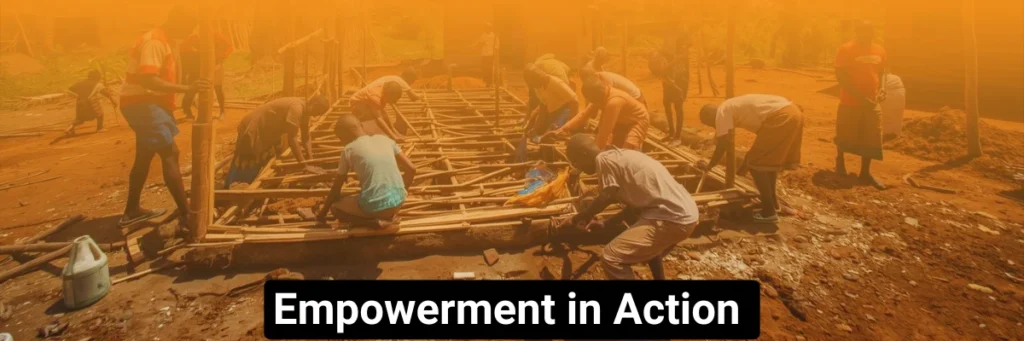
When a Community Builds Its Own Future
At Baino, empowerment isn’t just a word on a page—
It’s alive in every brick, every classroom, every skill shared.
I’ve watched fathers mix cement for the first time.
Mothers hammer boards into place.
Children proudly trace their names on freshly painted walls.
These aren’t just acts of construction.
They’re declarations: We can do this.
Our schools are built by the very hands of the communities they serve.
Parents, teachers, and local builders come together—guided, yet free to shape their own solutions.
Each brick tells a story of participation and pride.
Each classroom becomes a space of possibility, not dependency.
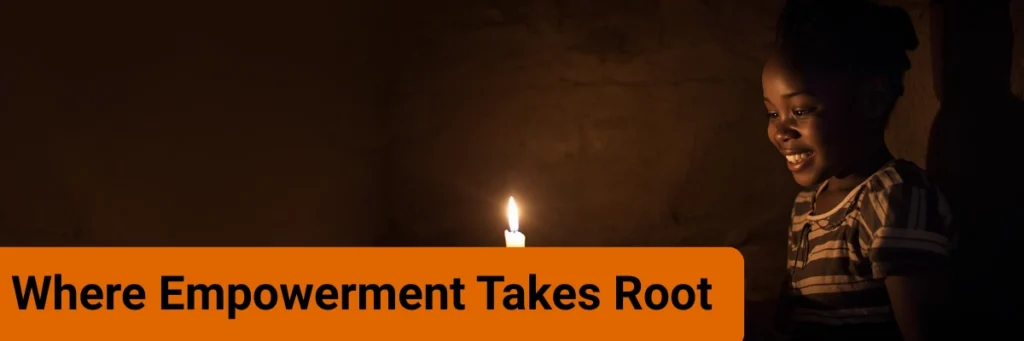
Where Empowerment Takes Root
And it doesn’t stop at walls.
Our literacy programs, leadership workshops, and skills training ripple outward.
A girl learning to read today becomes a mentor tomorrow.
A family learning to grow and store crops can feed themselves—and teach their neighbors.
Empowerment multiplies quietly.
Almost invisibly.
But its effects last for generations.
We design every project to be self-sustaining.
Tools are created—not handouts.
Knowledge is shared—not dictated.
Ownership is earned—not granted.
Because change that depends on generosity alone can vanish easily.
But change that grows from within endures.
When Generosity Becomes a Seed
And so, when you support Baino, your gift doesn’t just travel to a rural classroom—
It roots.
It nurtures skills, belief, and independence that last long after the initial brick is laid.
Your generosity becomes a seed that multiplies quietly, steadily, and powerfully.
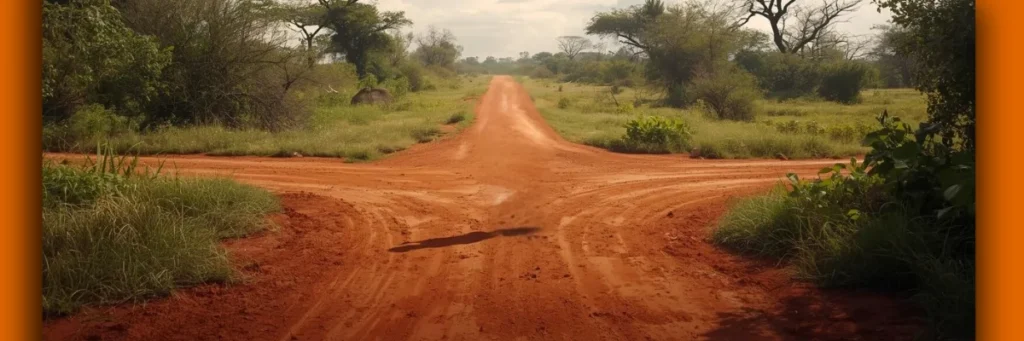
The Harder Road — And Why We Still Choose It
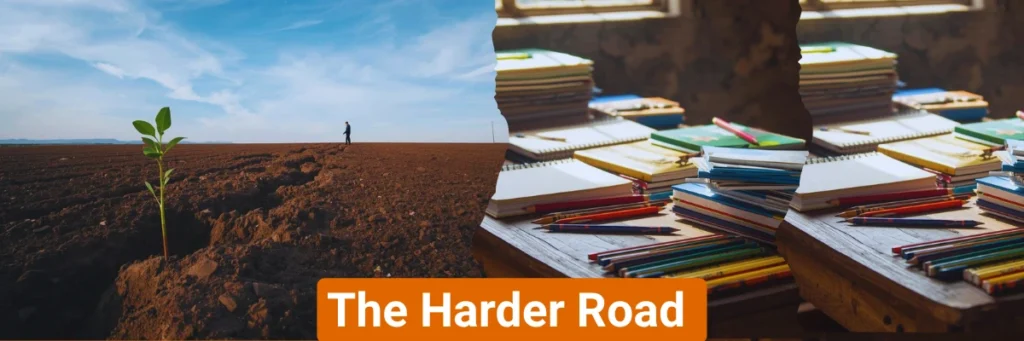
When Change Moves at the Speed of Trust
“Empowerment is slow. It asks us to listen longer, to stay when progress feels invisible. But that’s how roots form — quietly, deeply.”
There are moments when the slow pace of real change tests everything—
Our patience.
Our faith.
Even our hope.
A school can rise brick by brick,
But the lessons take longer to settle.
Families can learn new skills,
But it takes months—sometimes years—before confidence blooms into independence.
And we live in a world that rightly demands proof before offering support.
When resources are limited, and when communities have been trapped in generational poverty—
When they’ve been historically marginalized—
It becomes a steep, uphill climb.
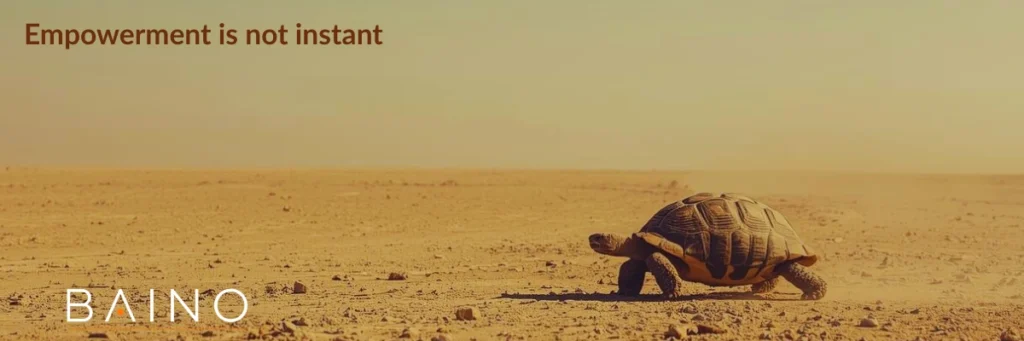
Empowerment is not tidy.
It is not instant.
It asks us to listen longer.
To stay when progress feels invisible.
To celebrate quiet victories that may not seem worthy of celebration to others.
This slower path is harder, yes.
But it’s the one that endures.
Quick fixes fade easily.
Handouts disappear.
But when a community learns to build, to teach, to lead—
The impact echoes for generations.
Choosing the Path That Lasts
For our supporters, this is where faith becomes transformative.
Your contribution isn’t a fleeting act of generosity—
It’s an investment in lasting change.
It’s a hand extended to stand beside a community—
Not a solution dropped from afar.
Together, we choose the harder road.
Because we believe that roots, once formed, hold steady through every storm.
And it is along this road—
Where patience meets purpose—
That trust is forged, partnerships deepen,
And empowerment grows from possibility into reality.
The Trust That Holds It All Together
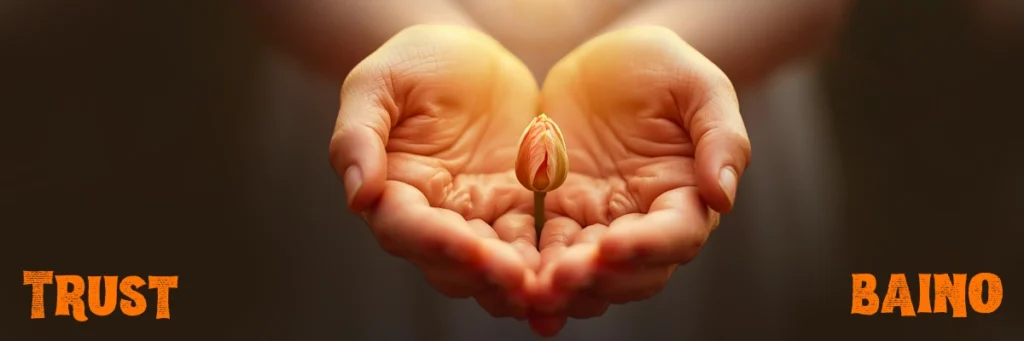
Empowerment cannot be rushed.
And it cannot be imposed.
It begins with trust—
Trust that the people we walk beside have the strength, the knowledge, and the vision to rise.
It’s the trust of our supporters.
The trust we place in our methods.
And the trust we extend to the communities we serve—
To empower, to uplift, to lead.
Before we ever lift a brick or open a classroom, we listen.
We ask questions.
We sit through long conversations under the shade of a tree.
We observe quietly.
We learn what the community dreams of building,
What they need,
And what they already know how to do.
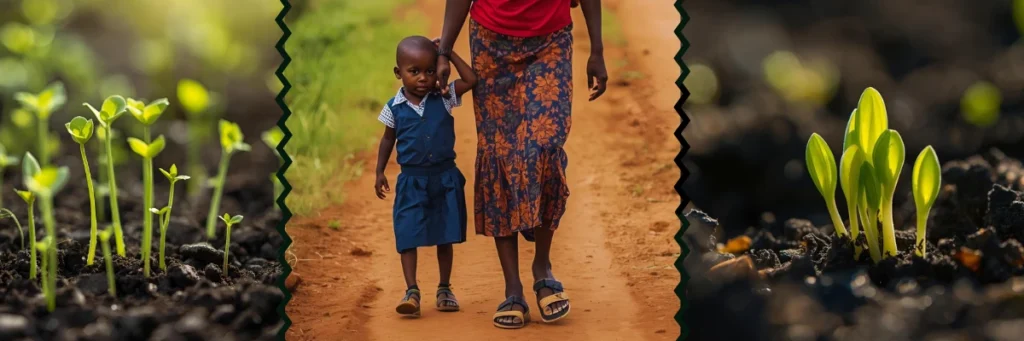
Because true change cannot be handed down.
It can only be nurtured from within.
When parents shape their own classrooms,
When teachers design lessons that reflect local realities,
When children take ownership of their learning—
That’s when transformation becomes permanent.
That’s the kind of empowerment that lasts.
For our supporters, this means your role is not as a rescuer.
You are a thoughtful partner.
Your generosity is a bridge, not a crutch.
You trust in the potential of others.
And in doing so, you help build tools, infrastructure, and a network of confidence, capability, and hope—
One that no outsider can take away.
Conclusion — An Invitation to Empower

Join the Work That Lasts
When you give through Baino Social Impact,
You’re not handing out help.
You’re standing beside those who build.
You’re helping shape a future where every child learns not to depend, but to dream—
A future rooted in empowerment through education in rural Africa,
Where every parent sees their own strength reflected in their family’s growth.
Where communities discover they have the tools, the knowledge, and the courage to shape their own tomorrow.
Every brick laid.
Every lesson taught.
Every skill passed on—
It’s a story of empowerment that endures.
And in that story, your support matters enormously.
Your faith becomes a quiet but powerful force
That helps hope take root and flourish.
And here’s the truth:
You’re not just a donor.
You’re a co-builder of hope.
Every child sponsored.
Every classroom opened.
Every future shaped—
It all carries your fingerprint.
Your belief.
Your legacy.
In fact, in our next conversation, we’ll explore how you can create a legacy with Baino—
One that lives on.
One that supports change that survives challenges.
One that builds futures that hold.
This isn’t charity.
It’s partnership.
It’s purpose.
And it’s the kind of giving that doesn’t just feel good—
It does good.
For generations.
Support empowerment-driven change.
Donate today to help build futures that last—one child, one family, one community at a time.

“Hope Wins” is our gift to you: 15 inspiring quotes on discipline, education, and hope, each paired with stunning imagery to lift your spirit. We’d be honored to send it to you.

Every click lights a candle. And every candle carries a story waiting to change.
Click Here to Subscribe to our YouTube channel and help us turn small sparks into bright tomorrows!

Every dollar is a seed—
growing into a book, a desk, a future
Your gift transforms barriers into beginnings.
Give today, and help a child step into tomorrow.