Where Resilience Meets Structure
There are moments that do not announce themselves as turning points.
They arrive quietly, without ceremony, and yet they alter how one sees the world.
This is one such moment.
This is not a story about solutions, or an organisation, or a solution.
It is the story of recognition.
A moment when two ways of seeing the world—formed across different places, different systems, and different lived realities—met, and could no longer remain separate.
What follows is not an argument.
It is an encounter.
One that brought into focus a question that continues to shape everything that came after:
What allows a child’s future to hold?
This story is where that question began.
The Encounter
The moment that quietly altered the course of my life is an incident I now call the Barefoot Encounter.
It was the day my two worlds met on a dusty road in rural Africa and demanded an immediate answer.
My life began in Uganda, in a region of remarkable endurance where communities carry one another even when the systems around them falter. I grew up within the quiet negotiations of survival: long walks to school, iron-sheet classrooms warmed by the afternoon sun, and parents who turned hope into strategy because there was nowhere else to turn.
Those realities shaped me long before I had the language to describe them.
Years later, when I moved to the West, my understanding of progress changed again, this time through contrast. I encountered a different kind of strength: quiet, intentional, often invisible. A strength built not only from individual effort, but from systems, shared agreements, and a culture that treats literacy not as privilege but as air.
Living between these two worlds gave me a rare vantage point.
One world taught me resilience.
The other taught me structure.
And together they revealed a truth I still carry with me:
without structure, resilience becomes survival and survival alone is not a future.
For years, these two worlds lived side by side in me, each shaping how I saw the other.
Until the day they collided.
The Barefoot Encounter
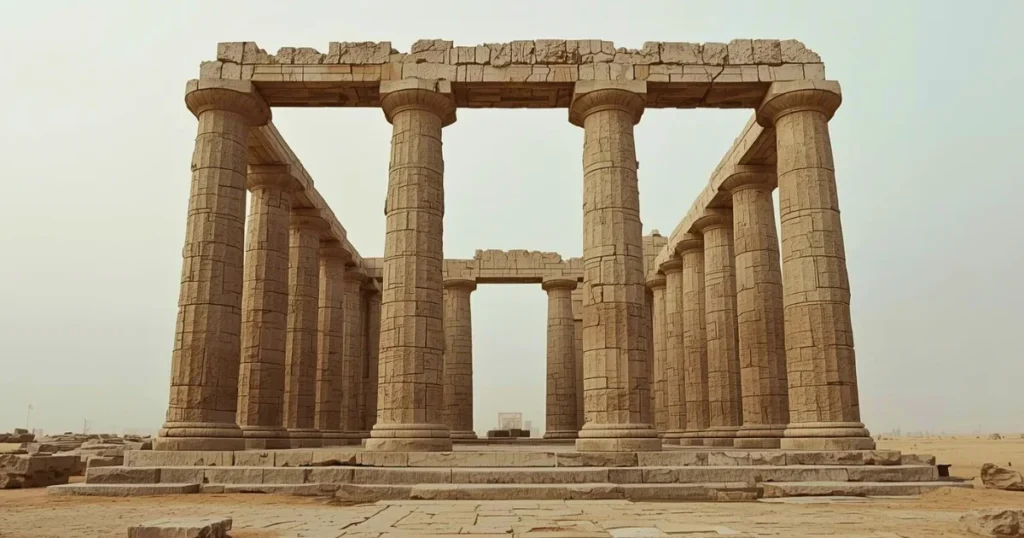
I had returned home for a family gathering after several years abroad. We were driving along a long, winding road in eastern Uganda when I saw them.
A group of schoolchildren walking barefoot through the dust.
Their uniforms were faded from many washings. Their small feet had hardened from necessity. They walked with the quiet determination that children often carry when hardship has become ordinary.
This was not new to me. I had lived that reality myself.
But after years in a society where systems cushion even the most vulnerable, the sight struck differently.
The car slowed. The children looked up briefly, curious but untroubled, then continued walking.
For a moment our eyes met.
And in that moment, something inside me tightened.
Not pity.
Not shock.
But a deeper question that felt almost ancestral.
How can a child walk to school barefoot in an age of such abundance?
And perhaps an even harder question followed:
But an even harder question followed.
What does it say about us, the adults, that we have allowed this to persist?
It felt like a quiet betrayal of the young.
In that instant, the two worlds within me aligned.
The Uganda that raised me had shown me the cost of absent systems.
The West that reshaped me had shown me what intentional structures make possible.
Standing between them, a responsibility settled over me with unusual clarity.
If I had been allowed to live between two worlds, then perhaps my work must also stand between them.
As a bridge.
The Decision to Build
That moment became the seed of Baino Social Impact.
Not as a reaction, but as a commitment.
Because poverty and illiteracy are rarely the result of individual failure. More often, they are the result of systems that were never built, or that stopped functioning long ago.
A child walking barefoot to school is not only a symbol of hardship. It is evidence of something deeper: the absence of the structures that should protect childhood in the first place.
Baino was created to confront that absence.
Not through sentiment, but through design.
To build structures rather than temporary gestures.
To cultivate dignity rather than dependency.
To pursue the kind of long-term educational investment that allows communities to shape their own future.
At its core, Baino is grounded in a simple conviction:
literacy and opportunity must be engineered, not left to chance.
Where the Two Worlds Meet
In many ways, Baino is the meeting point of my two worlds.
From Uganda comes the resilience of communities that refuse to surrender their future even when resources are scarce.
From the West comes the lesson that systems — when built with discipline and care — can transform resilience into progress.
When those two forces meet, something powerful becomes possible.
Not charity alone.
Not admiration alone.
But partnership.
A partnership grounded in the belief that every child, regardless of birthplace, deserves the chance to grow into the fullness of their mind and the dignity of their becoming.
The Barefoot Encounter remains the question behind all our work.
What will it take to ensure that a child’s future is shaped not by the soil beneath her feet, but by the possibilities of the century she actually lives in?
Because futures do not collapse due to a lack of potential.
They collapse from lack of structure.
Because a child’s future should not depend on what they can endure, but on what has been built to carry them forward.
Without structure,
resilience becomes survival.
And survival alone is not a future.
The Work That Followed
What began on that dusty road did not end there.
The question it raised did not settle into memory.
It continued.
In how we think about progress.
In how we understand failure.
In how we define responsibility.
Because the challenge was never only what I saw that day.
It was what allows such realities to continue,
and what it would take for them to change.
Over time, that question led to a deeper recognition:
That progress does not hold because it begins.
It holds when the conditions around it allow it to continue.
This is the work Baino has taken on.
Not to respond to moments,
but to understand what produces them.
Not to rely on effort alone,
but to build the conditions, pathways, relationships, protections, and norms that allow progress to endure.
This is what we are continuing to learn.
And this is how Baino builds change.