Why learning endures more easily when participation feels connected to everyday life
Part of a series on how learning begins, develops, and continues within real communities.
Learning can begin.
Pathways can exist.
And still, movement can fade.
Not because the structure is absent,
but because something more subtle is missing.
The person does not recognise themselves within the path.
At Baino Social Impact, this is where our attention turns next.
Because progress is not sustained by structure alone.
It continues when people can recognise themselves within the path they are walking,
and remain connected to it over time.
A path must be more than visible
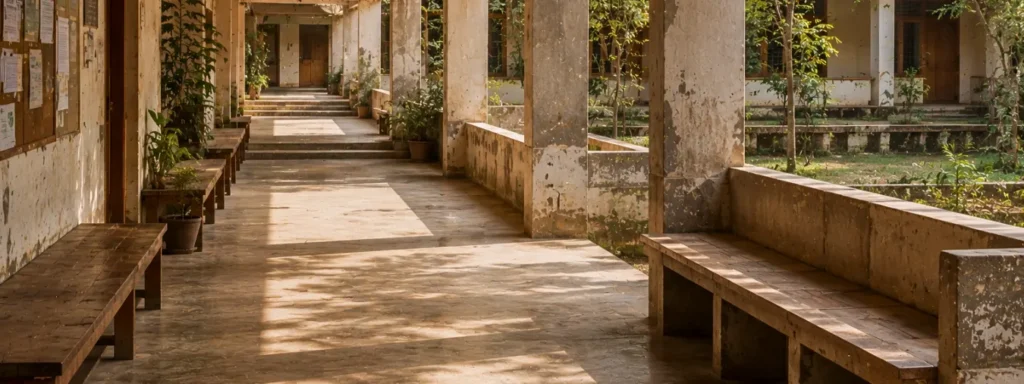
A pathway can be clear.
It can show direction.
It can connect stages.
It can carry learning toward participation within society.
But clarity alone is not enough.
A person must also feel that the path is theirs to walk.
That it belongs within their world.
That continuing along it does not require them to step outside of who they are.
Without this, even well-designed pathways remain fragile in practice.
Not rejected,
but difficult to remain within fully.
Belonging allows participation to continue
Belonging is often understood as comfort.
But in this context, it is something more structural.
It is the sense that one’s effort has a recognised place within the life surrounding it.
Because when effort feels disconnected from the world around it,
it becomes heavier to sustain.
Participation begins to feel exceptional rather than continuous.
Something entered briefly,
rather than something life can continue to hold.
Where this sense of belonging is present, people remain.
They return.
They persist.
They carry effort forward even when it becomes difficult.
Where it is absent, movement becomes fragile.
People begin, but do not continue.
They engage, but do not remain.
Because the path does not feel anchored within the environments that shape everyday life.
Identity shapes what feels possible
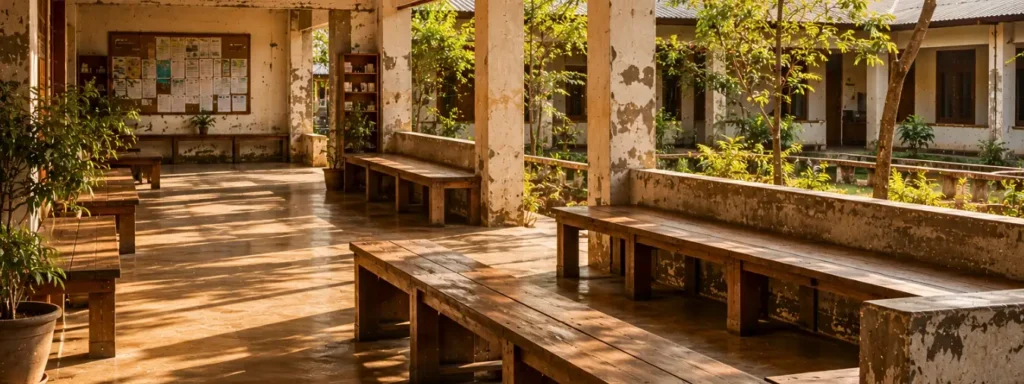
People do not move only according to access or opportunity.
They move according to what feels recognisable within their identity, their surroundings, and their experience of the world.
What they have seen.
What they have experienced.
What is recognised around them.
If learning and participation are not reflected within these experiences, they can begin to feel distant.
Not impossible,
but disconnected from ordinary life.
And paths that feel disconnected from life are harder to remain within over time.
But when people can see examples within their own context, something changes.
The path becomes clearer.
Not only in structure,
but in meaning.
Participation begins to feel less exceptional,
and more imaginable within everyday life.
Culture carries what systems begin
Even the strongest systems cannot sustain themselves alone.
They require reinforcement.
Through repetition.
Through shared expectations.
Through what is recognised, encouraged, and supported within everyday life.
This is the role of the surrounding environment.
Not as tradition alone,
but as the set of social signals that allow people to recognise that their participation belongs.
What is encouraged.
What is normalised.
What is sustained.
Where learning is carried by these signals, it becomes easier to continue across time and across lives.
Where it is not, participation remains fragile,
even when pathways exist.
Progress must be held collectively
If learning and participation remain individual efforts, they become difficult to sustain over time.
Each person must carry the full weight of continuation alone.
And eventually, that weight becomes difficult to keep carrying.
But when progress is shared, something changes.
Support becomes distributed.
Effort becomes recognised.
And remaining within the path no longer feels like an individual burden carried in isolation.
What begins as individual movement gradually becomes collective direction.
Participation is no longer sustained by personal effort alone,
but reinforced through the surrounding environment, through shared expectations, and through the presence of others continuing alongside it.
What we are strengthening
At Baino Social Impact, this is the work of belonging and culture.
Not to shape identity from the outside,
but to strengthen environments where people can recognise themselves within the path they are walking.
Where learning is not separate from life.
Where participation does not feel distant from everyday experience.
Where effort is understood, reinforced, and carried within the community around it.
Because this is what allows progress not only to begin,
but to continue across time.
Conclusion
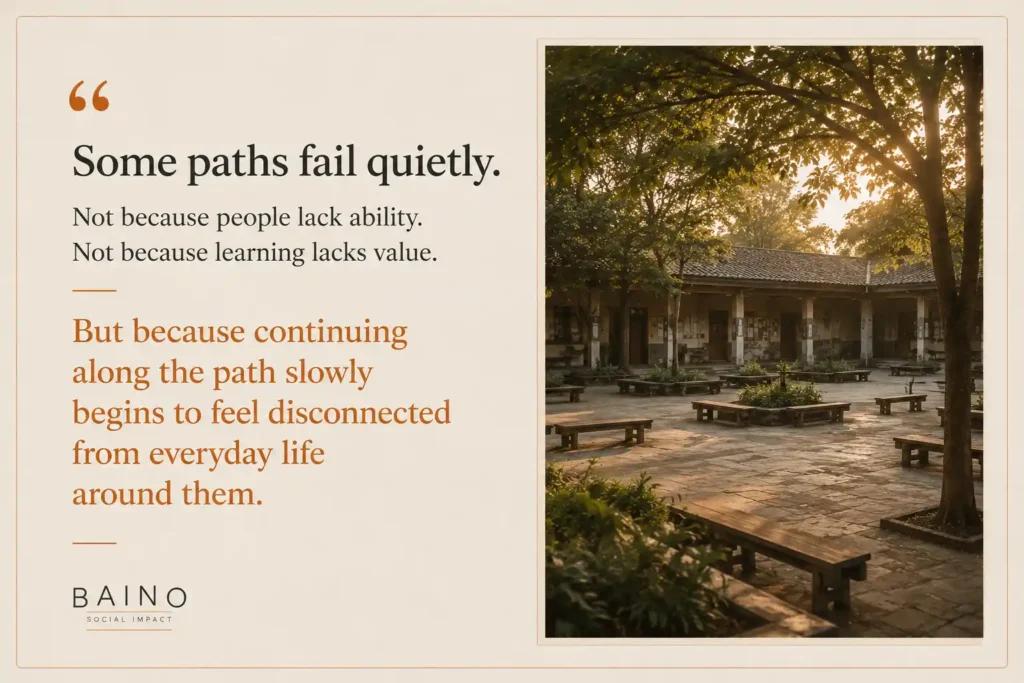
Learning begins with conditions.
It moves through pathways.
But it endures when people are able to remain within the path over time.
When people can recognise themselves within the path, participation becomes easier to sustain.
They do not walk alone.
They continue.
They return.
And over time, what begins as individual continuation becomes something larger than the individual itself.
The path becomes socially carried.
And where this happens consistently, communities themselves begin shaping whether learning continues, weakens, or expands across generations.
Every article is one part of a larger system.
Follow the connections between principles, practice, observation, and community life to explore how lasting progress is built.
When My Two Worlds Met on a Dusty Road
Explore the personal story that helped shape Baino’s understanding of identity, belonging, participation, and movement across different environments.
The Pathways That Carry Learning Into Participation
Explore the structures that connect learning to movement, continuity, and participation over time.
Why People Do Not Stay on the Path
Explore how environments quietly shape persistence, withdrawal, and continuation over time.
School Does Not Always Set the Schedule
An observation of how community realities and daily responsibilities shape whether participation feels connected to ordinary life.
Read Field Note →It is designed. This system helps us build it with intention, clarity, and continuity.
Four Directions.
One Purpose.
These four directions help you explore the framework from every angle: returning to the foundation, connecting related ideas, continuing forward, and seeing how it all comes to life in the real world.