The structures that connect learning to movement, continuity, and participation over time
Part of a series on how learning begins, develops, and continues within real communities.
Learning can begin.
But it does not always continue.
And even when it continues, it does not always move forward.
This is one of the quieter realities surrounding education.
People learn.
They acquire knowledge.
They develop ability.
Yet over time, that learning can stall.
Not because it lacks value,
but because the structures required to carry it forward remain weak, fragmented, or absent.
What lies beyond learning is not always clear.
And what connects learning to participation is not always present.
At Baino Social Impact, this is where our focus shifts. Not away from learning,
but toward what allows it to continue beyond the point where it begins.
Learning without pathways becomes disconnected
It is possible for learning to exist in isolation.
To be present,
but not connected.
A student completes their studies but finds no clear next stage.
A young person develops skills but has no structure through which to apply them.
Knowledge accumulates,
but remains separated from participation.
In such cases, the problem is not learning itself.
It is the absence of pathways.
Without pathways, progress becomes difficult to sustain.
Movement slows.
Transitions weaken.
And over time, participation begins to narrow.
Not suddenly,
but gradually.
As preparation loses connection with what comes next.
Pathways carry learning forward
A pathway is not a single opportunity.
It is a structure that connects stages.
It links learning to application.
Preparation to participation.
Entry to continuation.
It allows movement to continue beyond the point where learning begins.
This is what turns learning into something active within the world.
Not something merely held,
but something carried forward.
Not something completed,
but something extended through participation over time.
Where pathways exist, individuals are not left to navigate transitions alone.
There is direction.
A sense that movement can continue.
And this changes how learning is experienced.
It becomes connected to life beyond instruction itself.
Infrastructure is more than buildings
When people think of learning infrastructure, they often think of physical spaces.
Schools.
Libraries.
Classrooms.
These matter.
But infrastructure, in its fuller sense, is not only physical.
It is also organisational.
It includes the systems that allow learning to move from one stage to another.
Clear entry points.
Defined progressions.
Structures that support transition.
Connections between learning and participation in the wider world.
But infrastructure also exists at the level of collective organisation and expectation.
In how movement through life is understood and supported.
In whether transitions feel connected or fragmented.
In whether people can see continuity between preparation, participation, and contribution over time.
In this sense, infrastructure is also a form of social and mental architecture.
It shapes how individuals relate to direction, progression, and possibility within the environments around them.
Without these forms of continuity, even strong institutions can become disconnected from the lives surrounding them.
With them, learning becomes part of a larger process of continuity and participation.
Access is not the same as movement
Providing access to education is essential.
But access alone does not guarantee continuation.
A person may enter a system without being able to move through it.
They may begin without being able to continue.
They may complete instruction without being able to transition into participation.
This is where many efforts stop too early.
They create entry,
but not continuity.
They open doors,
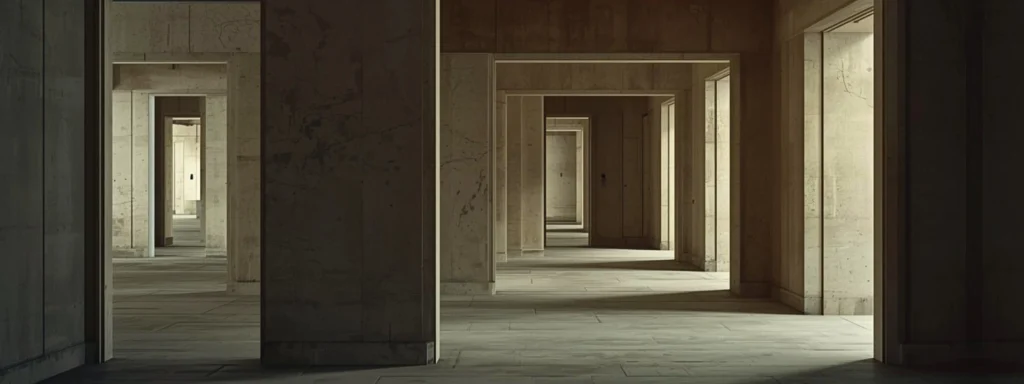
but do not build the corridors beyond them.
At Baino, we are also interested in what happens after access.
Whether learning can continue.
Whether it can connect across stages.
Whether it can move beyond preparation and into participation within the world.
Participation is the continuation of learning
Learning reaches its fuller meaning when it becomes part of life.
When it is applied.
When it contributes.
When it allows individuals to participate in the world around them with direction, continuity, and agency.
This is what we mean by participation.
Not simply employment,
though that may be one expression.
But the broader ability to engage, contribute, and shape one’s path within a community.
Participation is where learning becomes visible beyond the classroom.
And without pathways, this transition remains uncertain.
What we are building
At Baino Social Impact, we focus on strengthening the structures that carry learning forward.
Not only by supporting access,
but by connecting stages.
By helping learning continue beyond instruction itself.
Into application.
Into contribution.
Into participation.
This includes physical environments,
but also the systems that link them together over time.
Because what matters is not only whether learning begins.
But whether it can continue moving forward.
Conclusion
Learning can begin.
But what determines whether it continues is often less visible than learning itself.
The pathways that carry preparation into participation are shaped through continuity, transition, and structures that allow movement to continue over time.
Yet many systems stop at access alone.
They create entry,
without creating continuation.
Learning must evolve into becoming more than just knowledge through participation.
Understanding why this happens is essential to understanding why pathways matter in the first place.
→ Continue reading: When Access to Learning Is Not Enough
Every article is one part of a larger system.
Follow the connections between principles, practice, observation, and community life to explore how lasting progress is built.
When My Two Worlds Met on a Dusty Road
Explore the personal journey that helped shape Baino’s understanding of movement, transition, opportunity, and participation across different environments.
Why Learning Begins with Stability
Explore the conditions that make learning possible before instruction begins.
When Access to Learning Is Not Enough
Explore why access creates entry, but does not automatically create movement, continuity, or participation.
Three Textbooks Across a Classroom
An observation of how learning can begin despite constraints, while still revealing the challenges of sustaining movement and progression over time.
Read Field Note →It is designed. This system helps us build it with intention, clarity, and continuity.
Four Directions.
One Purpose.
These four directions help you explore the framework from every angle: returning to the foundation, connecting related ideas, continuing forward, and seeing how it all comes to life in the real world.