How environments quietly shape persistence, withdrawal, and continuation
Part of a series on how learning begins, develops, and continues within real communities.
A pathway can be visible.
It can be accessible.
It can even be carefully structured.
And still, people do not always remain within it.
They begin.
They engage.
And then, gradually, movement weakens.
This is often explained in simple terms.
Lack of effort.
Lack of discipline.
Lack of motivation.
But these explanations rarely reach the deeper structure of the problem.
Because withdrawal is not always a sudden rejection of the path.
More often, it is a slow weakening of connection between the person and the environment surrounding the path itself.
Not collapse.
Not refusal.
A gradual sense that continuing no longer feels naturally held within ordinary life.
A path must feel connected to life
For a person to remain within a pathway, the path must feel connected to the world they inhabit.
Not only intellectually,
but socially, emotionally, and structurally.
It must feel recognisable within the logic of everyday life.
Within what people around them have experienced.
Within what feels imaginable.
Within what appears reachable without requiring a complete separation from their identity, surroundings, or social reality.
When this connection weakens, the pathway begins to feel distant.
Not necessarily impossible.
Not necessarily unwanted.
But increasingly difficult to carry continuously across time.
Because what feels disconnected from life eventually begins to feel heavier to sustain.
Persistence depends on recognition
Sustained participation is rarely maintained through instruction alone.
It depends on recognition.
Seeing others who have remained within the path.
Seeing examples that feel socially close enough to be real.
Seeing participation reflected within ordinary environments rather than appearing distant or exceptional.
Without this reinforcement, effort gradually changes in character.
What once felt like movement within life begins to feel like movement away from it.
A person may continue for a time.
They may remain capable.
They may still value the path itself.
But without surrounding recognition, continuation begins to feel increasingly isolated.
And isolation quietly increases the weight of persistence.
Misalignment creates quiet friction

When participation does not feel aligned with identity, environment, or surrounding expectations, friction begins to appear.
Not always as open resistance.
More often as hesitation.
Interruption.
Periods of withdrawal.
Reduced continuity between effort and everyday life.
The pathway may still exist.
Support may still be available.
Capability may still remain intact.
But the movement no longer feels naturally carried by the surrounding environment.
And over time, this produces a quieter form of disengagement.
Not a single moment of departure,
but the gradual exhaustion of remaining within something that no longer feels fully connected to life around it.
Persistence is shaped through environment
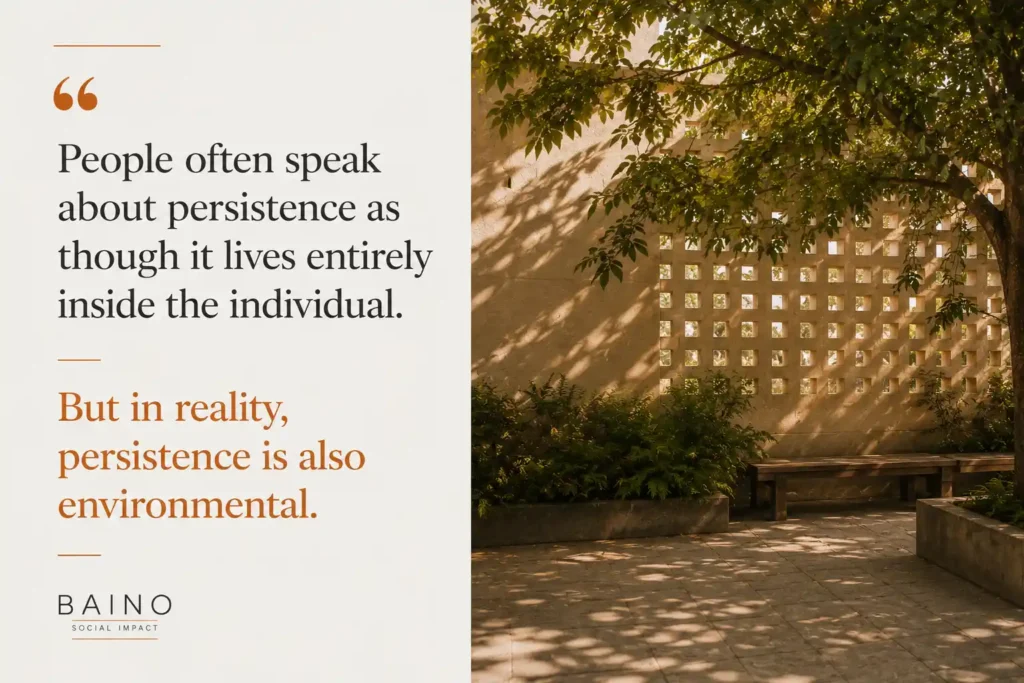
Persistence is often described as a personal trait.
Something an individual either possesses or lacks.
But in practice, persistence is shaped through conditions.
Through whether effort is reinforced or continually isolated.
Through whether progress remains visible across time.
Through whether participation feels connected to a recognisable future rather than suspended outside ordinary life.
Where these forms of reinforcement exist, continuation becomes easier to sustain.
Not because difficulty disappears,
but because the surrounding environment helps carry the weight of remaining within the path.
Where they are absent, persistence weakens gradually.
Not necessarily through unwillingness,
but through the accumulated strain of sustaining participation without enough surrounding alignment to support it.
Leaving is often a form of adaptation
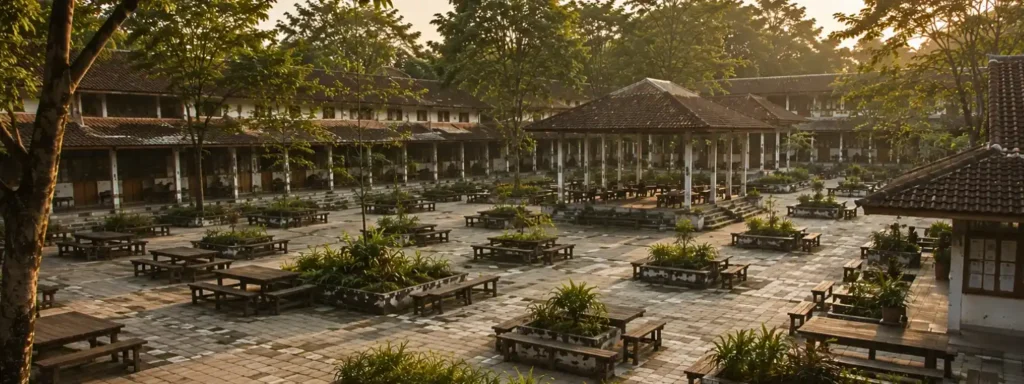
When people step away from a pathway, this is not always a rejection of learning, participation, or aspiration.
Sometimes, it is adaptation.
A response to what feels socially, emotionally, or structurally sustainable within their present reality.
If the path begins to feel too distant from everyday life,
too unsupported within the surrounding environment,
or too disconnected from what feels recognisable and maintainable over time, withdrawal can begin to feel like the more stable position.
This matters because it changes the question entirely.
Not:
Why did they stop?
But:
What conditions made continuation increasingly difficult to sustain across time?
That shift matters because it moves attention away from individual blame and toward the environments that shape whether participation can endure.
What this reveals about continuation
Remaining within a pathway is not only about beginning well.
It is about whether alignment can hold across time.
Between the person and the surrounding environment.
Between effort and social reinforcement.
Between participation and what feels meaningful, recognisable, and sustainable within everyday life.
When this alignment strengthens, continuation becomes more likely to endure through difficulty.
When it weakens, movement becomes harder to maintain consistently, even when ability and opportunity still exist.
And this is why disengagement is often quieter than it first appears.
People do not always leave suddenly.
Sometimes, the connection between the person and the path simply weakens gradually until continuation no longer feels naturally held within life around them.
Conclusion
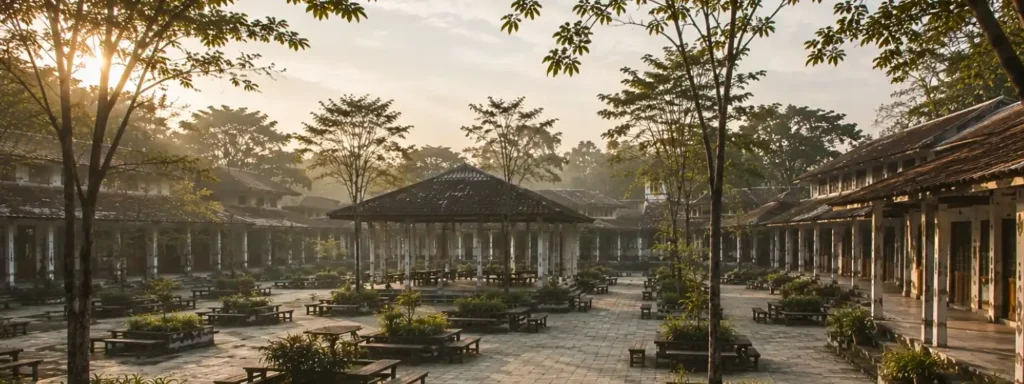
People do not step away from pathways only because the path is difficult.
More often, they step away when participation no longer feels sufficiently connected to identity, recognition, or the realities surrounding everyday life.
This is why belonging matters structurally.
Not as comfort alone,
but as continuity.
As the set of conditions that allows people to recognise that remaining within the path still makes sense within the world around them.
Because when participation feels connected to life, continuation becomes easier to sustain across time.
And when continuation becomes sustainable, progress is more likely to endure beyond isolated moments of effort.
But this raises a deeper question.
If no person sustains continuity entirely alone, then what allows participation to endure when individual effort begins to weaken?
This is where the surrounding community becomes more than background.
Through what is recognised.
Through what is repeated.
Through what becomes visible enough to be followed.
Through the quiet signals that shape whether continuing still feels possible within ordinary life.
A path may begin with the individual.
But whether it endures may depend on something larger:
How communities carry progress forward.
Every article is one part of a larger system.
Follow the connections between principles, practice, observation, and community life to explore how lasting progress is built.
When My Two Worlds Met on a Dusty Road
Explore the personal story that helped shape Baino’s understanding of belonging, identity, participation, and movement across different worlds.
When People See Themselves in the Path
Explore why learning endures more easily when participation feels connected to everyday life and a person’s sense of belonging.
How Communities Carry Progress Forward
Explore how communities reinforce participation through repetition, recognition, and shared continuation across time.
School Does Not Always Set the Schedule
An observation of how daily responsibilities, competing demands, and community realities influence whether participation remains sustainable over time.
Read Field Note →It is designed. This system helps us build it with intention, clarity, and continuity.
Four Directions.
One Purpose.
These four directions help you explore the framework from every angle: returning to the foundation, connecting related ideas, continuing forward, and seeing how it all comes to life in the real world.