Why participation endures more easily when progress becomes socially reinforced
Part of a series on how learning begins, develops, and continues within real communities.
Progress can begin with an individual.
A person learns.
A person participates.
A person begins moving toward a different future.
But for progress to endure across time, it cannot remain individual effort alone.
It must become socially carried.
Repeated across lives.
Recognised across environments.
Reinforced through what communities gradually learn to sustain, expect, and continue.
This is where the role of community becomes more visible.
Not simply as support,
but as part of the structure that determines whether participation remains isolated or continues across generations.
What is repeated becomes normal
Every community develops patterns over time.
Patterns of attention.
Patterns of participation.
Patterns of what people continue returning to across everyday life.
How time is used.
What is encouraged.
What is recognised.
What becomes visible often enough to feel ordinary.
These patterns are not always formally designed.
But they accumulate through repetition.
And over time, repetition begins to shape what feels normal.
Where learning, participation, and continuation are repeatedly visible, they gradually become easier to imagine as part of ordinary life.
Where they remain rare or socially distant, they continue to feel exceptional.
This distinction matters because continuity depends partly on normalisation.
What feels socially familiar becomes easier to sustain across time.
Expectations quietly shape participation
Communities do not only shape support systems.
They also shape expectation.
What people believe is realistic to continue pursuing.
How far participation appears capable of extending.
Which forms of progress feel socially recognised rather than uncertain or distant.
These expectations do not always prevent beginnings.
People may still enter pathways.
They may still participate for a time.
However, what eventually feels sustainable in the surrounding environment is often shaped by expectations.
Because over time, people adjust not only to opportunity, but to what appears continuously possible within the worlds around them.
Where participation remains visible across multiple lives, expectations widen.
Where it remains fragile, isolated, or rarely reinforced, continuation begins to narrow gradually across time.
Not always through direct limitation.
Instead, it is usually a product of subtle social alignment.
Direction shapes what communities move toward
Beyond expectation, communities also carry direction.
A quieter sense of where participation appears to lead over time.
What forms of life become repeated.
What futures feel socially recognisable.
What pathways appear continually inhabited rather than temporarily entered.
This direction is rarely announced directly.
But it becomes visible through patterns.
Through which forms of participation continue across generations.
Through which forms of movement remain socially reinforced.
Through which futures appear sufficiently repeated to feel reachable within ordinary life.
Even when new pathways exist, movement often hesitates if those pathways do not align with the direction people repeatedly observe around them.
Because participation becomes easier to sustain when people can recognise that the path they are walking is not carried by them alone.
Reinforcement allows participation to continue
For participation to continue across time, effort must be reinforced repeatedly.
Not only at the beginning,
but throughout the longer process of remaining within the path.
This reinforcement comes from many directions.
From families that recognise continuation.
From peers moving within similar patterns of participation.
From environments where learning remains visible enough to feel socially sustained rather than individually carried.
Without reinforcement, effort gradually becomes isolated.
Each person must generate continuity alone.
Sustain momentum alone.
Carry uncertainty alone.
And over time, this isolation increases the difficulty of remaining within participation consistently.
But where reinforcement exists, effort becomes more distributed.
Recognised.
Encouraged.
Repeated across the surrounding environment rather than held entirely by the individual.
Culture carries what individuals cannot sustain alone
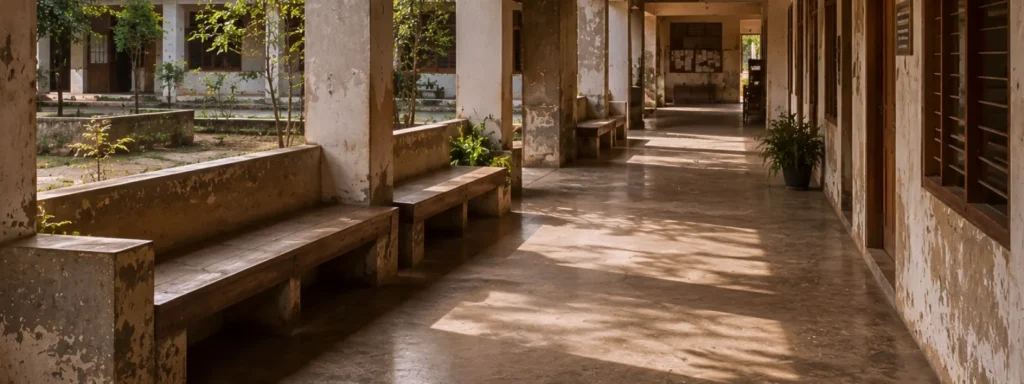
No individual carries progress indefinitely through personal effort alone.
There are periods of uncertainty.
Periods where continuation weakens.
Periods where remaining within the path becomes difficult to sustain consistently across time.
What allows participation to survive these moments is not only determination.
It is the surrounding environment.
An environment that continues reinforcing learning even when individuals struggle temporarily to carry it themselves.
Through recognition.
Through expectation.
Through visible participation across community life.
Through the repeated signals that continuation still belongs within ordinary experience.
This does not remove difficulty.
But it prevents participation from collapsing each time individuals encounter strain, interruption, or uncertainty.
Because the surrounding culture continues carrying continuity beyond any single moment of weakness.
Communities carry direction
Communities are not neutral environments.
Over time, they develop directional movement.
A current that shapes what forms of participation become easier to sustain collectively.
In some environments, this current gradually reinforces learning, participation, and continuation.
In others, it pulls in different directions entirely.
Where participation remains socially reinforced, movement becomes easier to sustain across multiple lives.
But where learning feels distant, unsupported, or weakly connected to ordinary life, individuals often find themselves moving against the surrounding current itself.
And sustaining movement against that current over long periods becomes increasingly difficult.
Not always because pathways are absent.
But because the wider environment does not yet carry participation strongly enough to help sustain it collectively.
Continuity transforms participation into direction
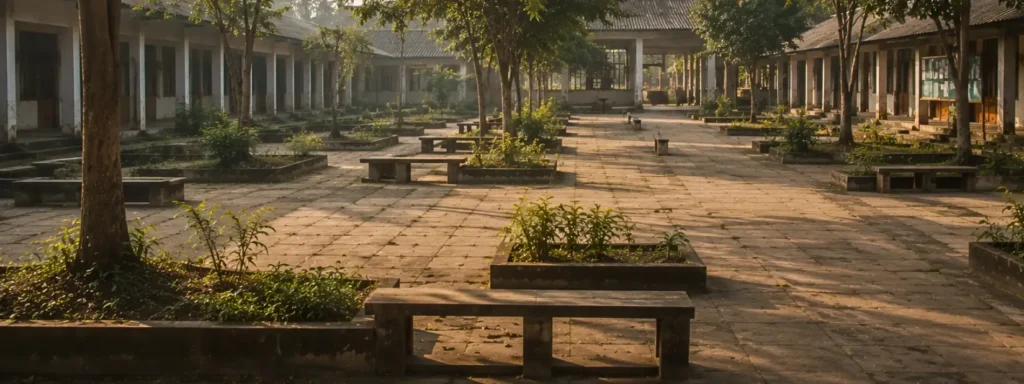
When repetition, expectation, reinforcement, and direction begin aligning across community life, something larger begins to form.
Participation stops feeling isolated.
It becomes directional.
Something visible enough to follow.
Repeated enough to recognise.
Sustained enough to extend beyond individual effort alone.
This is how progress becomes durable across time.
Not because it is protected once,
but because continuity itself becomes socially reinforced across environments, relationships, and everyday life.
What this reveals about lasting progress
If progress depends on this kind of continuity, then participation cannot rely on individuals alone to sustain it indefinitely.
It must become reinforced through community life itself.
Through what people repeatedly encounter.
Through what environments continue encouraging.
Through what forms of participation become visible, expected, and collectively sustained over time.
This is the deeper role of belonging and culture.
Not as abstraction.
Not as symbolism.
But as the gradual alignment of what communities recognise, reinforce, and continue carrying forward across generations.
Conclusion
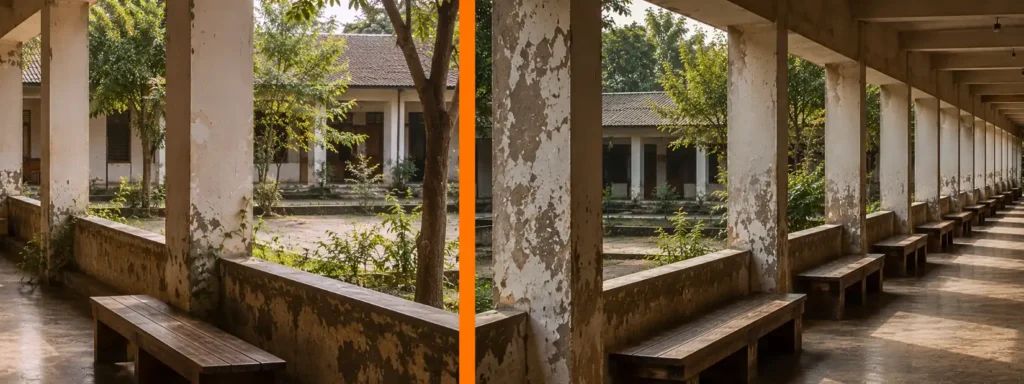
Progress may begin through individuals.
But whether it endures depends increasingly on what communities learn to sustain collectively.
Through what becomes repeated.
Through what becomes expected.
Through the directions communities continue reinforcing across everyday life.
Because when participation remains socially carried, progress becomes less fragile.
It no longer depends entirely on isolated effort.
It begins to acquire continuity beyond any single individual.
And over time, this continuity shapes what future generations learn to recognise as possible, sustainable, and worth continuing.
But continuity does not sustain itself automatically.
Communities can reinforce participation.
They can also weaken it.
They can carry direction forward across generations,
or gradually lose the structures that once allowed progress to remain visible, repeated, and socially sustained.
And when that continuity begins to fracture, participation itself becomes harder to carry across time.
Because progress does not weaken only when pathways disappear.
Sometimes, it weakens when communities can no longer consistently reinforce the conditions that make continuation feel visible, shared, and worth sustaining across everyday life.
Which raises a deeper question:
What protects continuity itself from erosion over time?
Every article is one part of a larger system.
Follow the connections between principles, practice, observation, and community life to explore how lasting progress is built.
6 Things I Admire About People in the West
Explore observations about the cultural patterns, expectations, and forms of continuity that help societies sustain participation across generations.
When People See Themselves in the Path
Explore why learning endures more easily when participation feels connected to everyday life and a person’s sense of belonging.
When Progress Is Interrupted
Explore why continuity determines whether learning can continue into participation when life places progress under strain.
The Long Walk to School Begins Before Learning Does
An observation of how community conditions, expectations, and daily realities begin influencing learning before instruction itself begins.
Read Field Note →It is designed. This system helps us build it with intention, clarity, and continuity.
Four Directions.
One Purpose.
These four directions help you explore the framework from every angle: returning to the foundation, connecting related ideas, continuing forward, and seeing how it all comes to life in the real world.