
Why Movement Needs a Visible Direction
Progress is often described as a matter of possibility.
What can be achieved.
What opportunities exist.
What paths are theoretically available.
But possibility alone rarely determines movement.
People move more consistently toward what appears capable of continuing.
Part of a series on how learning begins, develops, and continues within real communities.
People move toward what they see continue
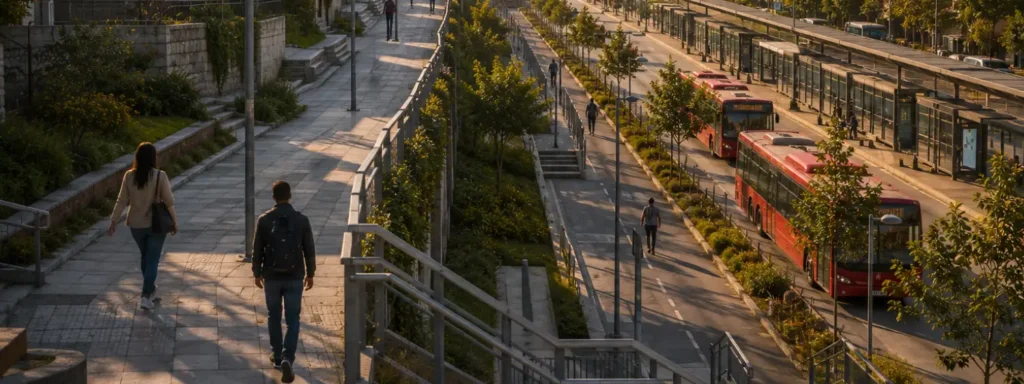
In every community, there are visible directions.
Not formal pathways,
but socially observable ones.
What people become.
What forms of progress appear repeatedly sustained.
What journeys continue far enough to become recognisable across time.
These directions are rarely announced directly.
But they are continuously observed through the environment itself.
And gradually, they begin shaping movement.
Because people do not only ask:
“What can be done?”
They also ask:
“What continues here long enough to be followed?”
Imagined futures rarely carry movement on their own
It is possible to imagine a different future.
To describe it.
To encourage it.
To speak about broader possibilities.
But imagined futures, on their own, rarely organise sustained movement.
Because they do not yet appear socially reinforced.
They exist as ideas,
not as directions that visibly continue across people and over time.
And without visible continuation, movement hesitates.
Not because people lack ambition,
but because the path ahead still appears uncertain, temporary, or difficult to carry forward.
Observed futures carry social weight
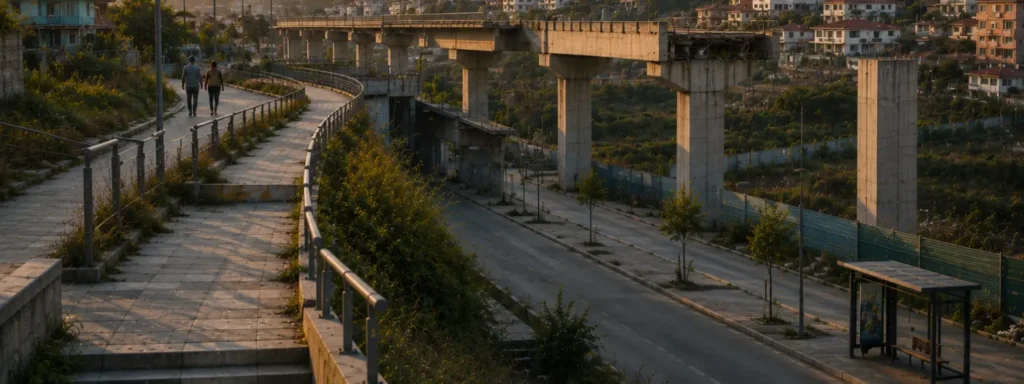
What people repeatedly see sustained carries more influence than what they are simply told.
When a direction becomes visible,
when it continues across time,
when it extends beyond isolated individuals and temporary moments,
it gradually begins feeling socially real.
Not merely possible,
but followable.
And once a direction becomes followable, movement begins organising itself around that continuity.
Because environments do not only communicate possibility.
Over time, they communicate what forms of movement appear capable of holding.
Direction is established through continuity
A single example rarely establishes direction.
It may attract attention.
It may inspire discussion.
But it does not yet stabilise movement.
Direction forms when progress is repeatedly seen continuing across people, environments, and time.
Without disappearing.
Without constantly resetting.
Without remaining dependent on isolated individuals carrying it alone.
When this happens, something gradually shifts.
Movement becomes less uncertain.
Continuation becomes more socially believable.
The future ahead becomes easier to recognise before it is fully reached.
When direction is unclear
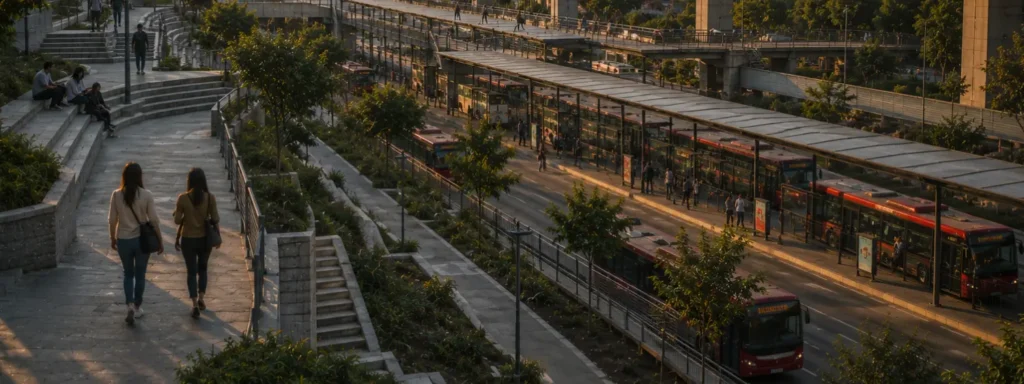
Where no visible direction exists, movement becomes unstable.
Individuals may still begin.
They may still make progress for a time.
Some may even move beyond what the surrounding environment usually sustains.
But without visible continuity, each effort remains difficult to carry forward socially.
Each person must interpret the path again.
Each outcome appears isolated.
Each step forward continues carrying uncertainty about whether movement will hold beyond the individual moment itself.
And over time, this weakens continuation.
Not because people are unwilling to move,
but because the direction ahead still does not appear broadly reinforced across the environment around them.
What this means for how we work
If people move toward what they repeatedly see continue, then progress cannot rely only on possibility.
It must become visible enough to stabilise movement.
Not once.
Not temporarily.
But repeatedly across people, environments, and time.
This is where our work becomes deliberate.
We do not only support learning itself.
We strengthen the conditions that allow its continuation to remain socially visible.
We do not only open pathways.
We help ensure those pathways can be recognised, followed, and sustained across time.
Because a direction that is rarely visible is difficult to follow consistently.
And a direction that does not appear capable of continuing is rarely trusted for long.
The responsibility of visibility
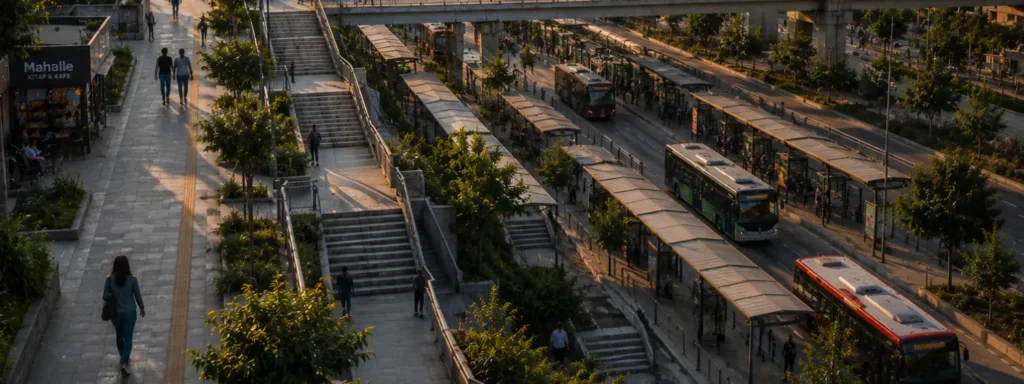
What becomes visible does more than communicate information.
Over time, it begins organising movement.
It signals:
what forms of continuation appear sustainable,
what futures seem socially reachable,
what kinds of progress remain visible long enough to feel real within ordinary life.
This carries a responsibility.
Because visibility does not only shape perception.
Gradually, it begins shaping what entire communities learn to follow.
When a new direction takes hold
When learning is not only present, but repeatedly visible,
when progress is not only possible, but socially sustained,
when outcomes are not isolated moments, but patterns that continue across time,
something begins shifting within the environment itself.
A new direction gradually becomes recognisable.
Not as an idea alone,
but as a lived trajectory that people can repeatedly observe holding across ordinary life.
And once that trajectory becomes socially believable, movement begins organising itself around it.
Conclusion
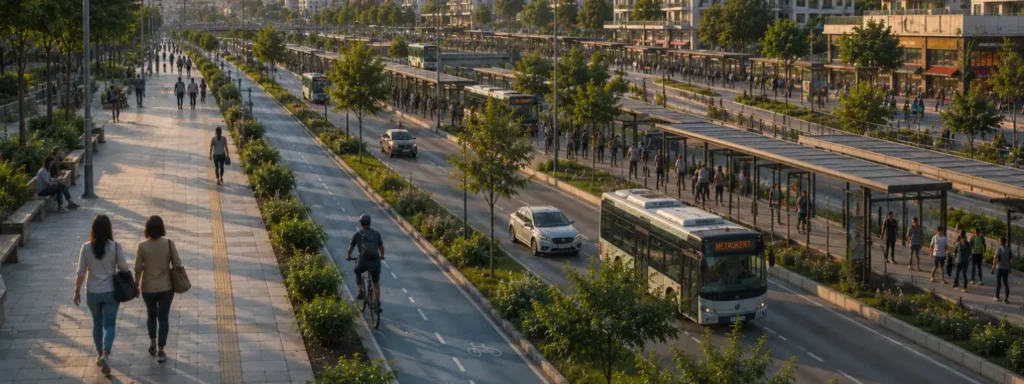
Progress rarely moves toward what is imagined alone.
More often, it moves toward what is repeatedly seen continuing across people, environments, and time.
Through visible direction.
Through sustained trajectories.
Through forms of movement that no longer appear temporary or isolated.
When that direction becomes socially recognisable, movement begins aligning with it more consistently.
And when continuity holds long enough to become trusted, people no longer need to be persuaded that the path exists.
They begin seeing where it leads before they fully arrive there.
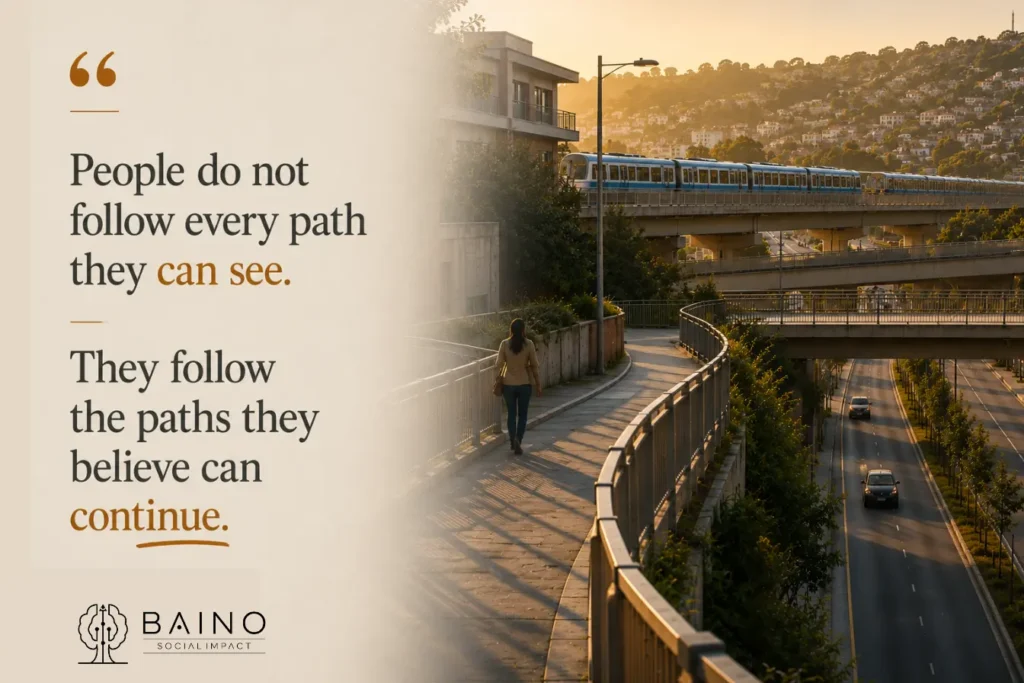
But visible direction does not sustain itself automatically.
It depends on whether continuity continues holding across time strongly enough for movement to remain socially believable.
Whether progress remains visible beyond isolated moments.
Whether environments continue reinforcing the path after attention has moved elsewhere.
And over time, the directions that survive are often the ones that become embedded deeply enough into ordinary life that people no longer experience movement as unusual once they begin following it.
Every article is one part of a larger system.
Follow the connections between principles, practice, observation, and community life to explore how lasting progress is built.
6 Things I Admire About People in the West
Explore observations about the patterns, expectations, and forms of continuity that help make progress visible, believable, and socially sustainable.
When Progress Becomes Normal
Explore how communities transform isolated effort into shared continuity through repetition, expectation, reinforcement, and culture.
The Space Between Worlds
Explore the intellectual architecture behind Baino’s understanding of progress, continuity, participation, and societal development.
An Iron-Sheet Roof in the Afternoon Heat
An observation of how physical conditions, daily realities, and environmental signals influence what forms of progress appear sustainable.
Read Field Note →It is designed. This system helps us build it with intention, clarity, and continuity.
Four Directions.
One Purpose.
These four directions help you explore the framework from every angle: returning to the foundation, connecting related ideas, continuing forward, and seeing how it all comes to life in the real world.