Why continuity determines whether learning can continue into participation
Part of a series on how learning begins, develops, and continues within real communities.
Learning can begin.
Pathways can exist.
People can commit.
Communities can support.
And still, progress can break.
Not because the effort was weak.
Not because the direction was unclear.
But because continuity became difficult to sustain.
At Baino Social Impact, this is where another layer of attention becomes necessary.
Because progress is not shaped by learning alone.
It is shaped by whether people can continue moving forward through the realities they must navigate every day.
Progress depends on continuity
Learning is not a single event.
It depends on return.
Showing up again.
Continuing where one left off.
Remaining connected to the path over time.
This continuity is what allows effort to accumulate into participation.
Without it, progress becomes fragmented.
Beginnings do not connect.
Gains do not hold.
Movement becomes inconsistent.
And over time, what was once beginning to strengthen starts to weaken again.
Reality does not pause for progress
In many contexts, daily life carries competing demands.
Economic pressure.
Household responsibilities.
Unexpected disruptions.
These are not interruptions to reality.
They are part of the environment people live within.
And when these pressures intensify, learning and participation are often the first to become difficult to sustain.
Not because they lack value.
But because immediate pressures often take precedence over long-term continuation.
Interruption is not failure
When progress breaks, it is easy to interpret it as failure.
But often, it is interruption.
A shift in priorities driven by necessity.
A pause caused by conditions that place continuity under pressure.
This distinction matters.
Because it changes how we respond.
From asking:
Why did they stop?
To asking:
What made continuation difficult to protect?
The fragile point of progress
There is a stage where progress becomes especially vulnerable.
Not at the beginning.
But during continuation.
When effort depends on stability that may not yet be secure.
When pathways exist, but the conditions required to remain on them are still fragile.
This is where many journeys break.
Quietly.
Not from lack of intention, but from accumulated instability that repeatedly interrupts movement forward.
Protection allows progress to hold
For progress to continue, continuity must be protected.
Not by removing all difficulty.
But by reducing the likelihood that effort will be repeatedly interrupted.
This includes:
- reducing economic pressures that force disengagement,
- supporting households so that learning can remain connected to daily life,
- strengthening the stability required for continued participation,
- protecting the conditions that allow progress to accumulate over time.
This is not about replacing responsibility.
It is about protecting continuity strongly enough for effort to hold.
Not all support sustains progress
It is important to be precise here.
Support does not automatically strengthen continuity.
Some forms of support relieve immediate pressure without protecting long-term participation.
They improve the moment.
But do not secure continuation.
At Baino, we focus on support that allows learning and participation to remain connected over time.
Not simply to restart progress repeatedly, but to prevent it from being continually undone.
What we are strengthening
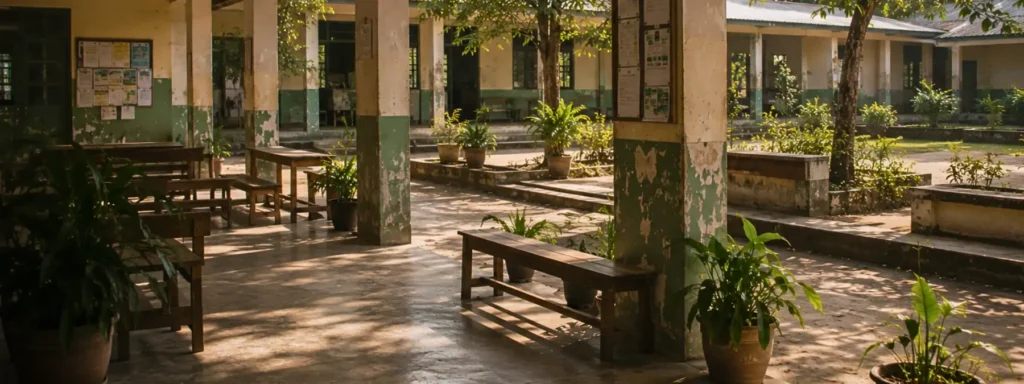
At Baino Social Impact, this is the work of Economic & Social Continuity.
Strengthening the conditions that allow progress to continue through the pressures of real life.
Protecting the stability required for learning to remain connected to participation, contribution, and movement forward over time.
Because beginnings matter.
But continuity determines whether progress can hold long enough to shape the future.
Conclusion
Progress does not depend on access or alignment alone.
It depends on continuity.
And continuity depends on whether effort can withstand the pressures that interrupt daily life.
When interruption is reduced, progress becomes more capable of holding over time.
And when continuity holds, learning can continue moving beyond preparation and into lasting participation within community life.
Every article is one part of a larger system.
Follow the connections between principles, practice, observation, and community life to explore how lasting progress is built.
The Space Between Worlds
Explore the deeper reasoning behind Baino’s belief that progress depends on conditions, structure, continuity, and the environments that support human development.
When People See Themselves in the Path
Explore why learning endures more easily when participation feels connected to everyday life and a person’s sense of belonging.
Why Progress Breaks Midway
Explore how interruption gradually weakens continuity and why progress becomes especially vulnerable during continuation.
School Does Not Always Set the Schedule
An observation of how household responsibilities, competing demands, and daily realities influence whether participation remains sustainable.
Read Field Note →It is designed. This system helps us build it with intention, clarity, and continuity.
Four Directions.
One Purpose.
These four directions help you explore the framework from every angle: returning to the foundation, connecting related ideas, continuing forward, and seeing how it all comes to life in the real world.